

Complete Startup Cost Breakdown
Chapter 1: The Real Cost of Starting a Shaved Ice Business
Starting a shaved ice business can be surprisingly affordable compared with many food businesses. You don’t necessarily need a restaurant, a commercial kitchen, or a massive inventory to get started. With the right equipment, a good location, and a simple menu, a small shaved ice operation can start generating sales without requiring an enormous upfront investment.
But there’s an important distinction between starting a shaved ice business and starting a shaved ice business that is prepared to make money.
You can technically buy an inexpensive ice shaver, a few bottles of flavor syrup, some cups, and start thinking about selling snow cones. But building a legitimate business means accounting for much more: equipment, permits, insurance, ingredients, branding, transportation, payment processing, marketing, operating expenses, and enough cash to survive the early weeks while you’re building your customer base.
So, how much should you actually expect to spend?
For 2026, a realistic startup range can look something like this:
| Business Type | Approximate Startup Range |
|---|---|
| Small home-based operation | $1,000–$3,000 |
| Shaved ice cart | $3,000–$10,000 |
| Mobile shaved ice setup | $5,000–$15,000+ |
| Shaved ice trailer | $15,000–$30,000+ |
| Larger commercial operation | $25,000+ |
These aren’t fixed prices. Your actual startup cost can be dramatically different depending on the equipment you purchase, where you operate, local regulations, whether you buy new or used equipment, and whether you’re starting with a simple cart or jumping straight into a trailer.
And that’s actually good news.
You don’t have to build the biggest shaved ice business on day one.
One of the smartest approaches is to build a business that matches your current budget and then reinvest your profits into better equipment, more inventory, stronger branding, additional locations, and eventually additional carts or trailers.
The $5,000 Question
Imagine you’ve saved $5,000 and want to start selling shaved ice.
You could easily convince yourself that you need to spend almost all of it on a fancy trailer.
But that’s not necessarily the smartest move.
Instead, you might allocate your money toward a quality commercial ice shaver, a professional-looking cart or serving setup, initial flavor inventory, cups and supplies, permits and insurance, signage, a payment system, and an emergency cash reserve.
Now you have something much more valuable than an expensive trailer.
You have a functioning business with money left in the bank.
That distinction matters.
Your first goal isn’t to look like a $100,000 business.
Your first goal is to make your first $100, then your first $1,000, then your first $10,000.
Once the business proves that customers are willing to pay you, you can scale.
Where Does the Money Actually Go?
A shaved ice business has several major startup categories.
Think of your startup budget as a pie divided between:
- Ice-shaving equipment
- Cart, trailer, or serving setup
- Flavors and ingredients
- Cups and serving supplies
- Permits and licenses
- Insurance
- POS and payment processing
- Branding and signage
- Transportation
- Marketing
- Working capital
The mistake many first-time entrepreneurs make is focusing almost entirely on the machine.
The machine is important—but the machine isn’t the business.
Your business is the entire system surrounding it.
You need something that can turn blocks or ice into a great product, serve customers quickly, collect payments, keep inventory stocked, attract attention, and operate legally and consistently.
That’s what you’re really paying to build.
Don’t Spend Your Entire Budget on Equipment
This deserves its own warning.
If you have $5,000 available, don’t automatically spend $4,900 on equipment.
Why?
Because businesses have unexpected expenses.
You might discover that you need additional signage. Your first flavor order might not be enough. You may need transportation. A permit may cost more than expected. You may need a tent, tables, coolers, extension cords, storage containers, cleaning supplies, or replacement parts.
And then there’s something even more important:
Working capital.
Working capital is the money available to keep the business operating.
You don’t want to make your first big sales weekend and discover that you don’t have enough money to restock cups and syrup for the next one.
A business can be profitable on paper and still run out of cash.
That’s why smart startup budgeting isn’t simply about asking:
“What’s the cheapest way I can start?”
A better question is:
“What’s the smartest way I can start without putting myself in a cash-flow problem?”
That’s the mindset we’re going to use throughout this guide.
Next chapter: Shaved Ice Machine Cost — How Much Should You Really Spend on an Ice Shaver?
Chapter 2: Shaved Ice Machine Cost — How Much Should You Really Spend on an Ice Shaver?
If there’s one purchase that gets new shaved ice entrepreneurs excited, it’s the ice shaver.
And that’s understandable.
The machine is the heart of the operation. It’s what transforms ordinary ice into the fluffy, snow-like texture customers are actually paying for.
But here’s where many new business owners make their first expensive mistake:
They assume the most expensive machine must be the best machine for their business.
It isn’t.
The right shaved ice machine depends on how much you’re selling, how often you’re operating, what type of ice you’re using, and how quickly you need to serve customers.
A machine for weekend backyard parties isn’t necessarily the right machine for a busy summer event.
How Much Does a Shaved Ice Machine Cost?
Depending on the type and capacity, shaved ice machines can range from relatively inexpensive countertop models to commercial machines costing several thousand dollars.
For budgeting purposes, you can think about them in three broad categories:
| Machine Type | Typical Budget | Best For |
|---|---|---|
| Entry-level electric shaver | $50–$200 | Home use, testing the concept |
| Commercial countertop shaver | $500–$2,000+ | Small businesses, events |
| Heavy-duty commercial shaver | $2,000–$5,000+ | High-volume businesses |
Prices vary considerably by brand, model, features, availability, and supplier, so treat these as planning ranges rather than fixed prices.
And there’s an important point here:
Cheap doesn’t automatically mean bad, and expensive doesn’t automatically mean profitable.
Your goal is to buy enough machine for the business you are actually building.
Starting Small? Don’t Buy More Machine Than You Need.
Suppose you’re planning to operate on weekends at birthday parties, community events, school functions, and small gatherings.
You may not need a massive commercial machine capable of handling an enormous line of customers.
On the other hand, if you’re planning to park at a busy festival where hundreds of customers could arrive within a few hours, machine capacity becomes much more important.
Imagine having a line of 30 customers and a machine that takes too long to produce each serving.
Now you’re not just dealing with an equipment problem.
You’re dealing with a customer experience problem.
People don’t like standing around forever waiting for a snow cone.
Speed matters.
What Should You Look For in a Commercial Shaved Ice Machine?
Don’t choose a machine based solely on price.
Look at:
Production capacity
How much ice can the machine process in a given period?
Shaving consistency
Does it consistently produce the texture you’re looking for?
Durability
Can it handle repeated use during long operating days?
Ease of operation
Can a new employee learn to operate it quickly?
Cleaning
How easy is it to clean and maintain at the end of the day?
Replacement parts
Can you easily get blades, motors, switches, and other replacement components?
Ice requirements
Does the machine require a particular type or size of ice?
Electrical requirements
Will your location provide the power the machine needs?
Portability
If you’re operating at different events, how easy is it to transport?
These questions can be more important than whether the machine costs $800 or $1,500.
The Ice Question: Block Ice vs. Cube Ice
This is one of the most important decisions to understand before buying your machine.
Not every shaved ice machine works the same way.
Some machines are designed around specific ice shapes or sizes, while others can accommodate different types of ice.
That’s why you should determine your ice source and ice-making process before purchasing equipment.
If your business depends on producing a particular type of ice, you may eventually need to budget for an ice machine or a reliable commercial ice supplier.
That creates another startup expense.
And this is exactly why buying the cheapest ice shaver you can find isn’t always the cheapest way to start.
You have to look at the entire system.
Don’t Forget the Blade
The blade is one of the most important components of an ice shaver.
A dull, damaged, or improperly adjusted blade can affect the texture of your shaved ice and the speed of production.
That’s why replacement parts should be part of your startup planning.
A smart business owner doesn’t ask:
“What happens if my machine breaks?”
They ask:
“What happens when something eventually needs to be replaced?”
That difference in thinking can save you from a major headache during your busiest season.
Should You Buy a Used Shaved Ice Machine?
A used commercial ice shaver can potentially save you a significant amount of money.
But there’s a catch.
You need to know what you’re buying.
Before purchasing used equipment, inspect:
- Motor condition
- Blade condition
- Housing
- Electrical components
- Switches
- Bearings
- Mounting hardware
- Signs of rust or corrosion
- Excessive vibration
- Unusual noises
- Availability of replacement parts
If possible, see the machine operate before purchasing it.
A machine that looks great in a photograph can have serious mechanical problems that aren’t obvious until you turn it on.
Your Machine Should Make Money—Not Just Look Good
This is perhaps the most important lesson in this entire chapter.
Equipment is an investment, not a trophy.
A $3,000 machine doesn’t automatically make you more money than a $1,000 machine.
The machine needs to support your sales volume.
If you’re selling 50 cups per weekend, your equipment needs are very different from someone selling 500 cups per weekend.
Think about your expected sales first.
Then choose your equipment.
A Simple Way to Think About Your Equipment Budget
Before purchasing an ice shaver, answer these questions:
How many cups do I expect to sell per day?
How many days per month will I operate?
Will I sell at private parties or public events?
Will I have one serving station or multiple stations?
Will I operate alone or have employees?
What type of ice will I use?
How far will I transport the equipment?
Once you answer those questions, your equipment budget becomes much easier to determine.
Instead of saying:
“I need the best shaved ice machine.”
You can say:
“I need a machine capable of handling my expected sales volume.”
That’s a much better business decision.
And remember, your first machine doesn’t have to be your last machine.
Start with what makes sense.
Build the customer base.
Generate revenue.
Then upgrade.
That’s how a lot of successful small food businesses grow—one sale, one customer, and one reinvestment at a time.
Coming Next
Chapter 3: Shaved Ice Cart vs. Trailer — Which One Should You Start With?
We’ll break down the actual costs of carts, trailers, tents, tables, transportation, and mobile setups—and explain why the cheapest setup isn’t always the best one.
Chapter 3: Shaved Ice Cart vs. Trailer — Which One Should You Start With?
One of the biggest decisions you’ll make when starting a shaved ice business is how you’re going to serve your customers.
You can start with a simple table and tent setup. You can build a professional shaved ice cart. You can operate from a mobile trailer. You can even start from a permitted home or fixed location, depending on your local regulations.
There isn’t one perfect setup for everyone.
The best choice depends on your budget, sales goals, mobility, storage, transportation, and the types of events you want to serve.
And here’s something worth remembering:
You don’t need a trailer to have a real shaved ice business.
A well-designed cart at the right location can outperform an expensive trailer sitting in the wrong location.
The Three Basic Startup Setups
For most new shaved ice entrepreneurs, the options fall into three categories:
1. Tent or Table Setup
This is generally the simplest way to test the business.
You may have:
- Commercial ice shaver
- Folding table
- Canopy tent
- Ice storage
- Syrup bottles
- Cups
- Spoons
- Signage
- Payment system
A basic setup can potentially be assembled for a few thousand dollars or less, depending heavily on the equipment you already own and local requirements.
The biggest advantage?
Low startup cost.
You aren’t committing thousands of dollars to a trailer before you’ve proven your concept.
The downside is that you may have less storage, less branding space, less protection from weather, and potentially fewer locations where the setup is permitted.
But as a testing platform, it can be incredibly useful.
2. Shaved Ice Cart
A shaved ice cart sits somewhere between a simple event setup and a full mobile trailer.
It’s more professional than simply putting equipment on a folding table, but generally much less expensive and complicated than purchasing a trailer.
Depending on the design, a cart might include space for:
- Ice shaver
- Syrup
- Cups
- Condiments
- Storage
- Cash/POS equipment
- Menu boards
- Branding
A cart can also look fantastic.
And presentation matters.
Imagine walking into an event and seeing a professional branded shaved ice cart covered with bright flavor bottles, a clean menu board, colorful signage, and a line of customers.
That looks like a business.
That’s very different from setting an ice shaver on an old folding table.
Why Carts Can Be a Great First Step
A cart can give you the professional appearance customers expect without requiring the investment associated with a full trailer.
It can also be easier to move between:
- Birthday parties
- School events
- Festivals
- Sporting events
- Community gatherings
- Corporate events
- Weddings
- Private parties
The exact locations where you can operate will depend on local rules and event requirements.
But the basic concept is powerful:
Bring the business to the customer.
3. Shaved Ice Trailer
The trailer is the big step.
A professionally equipped shaved ice trailer can give you much more room for:
- Equipment
- Ice
- Syrups
- Cups
- Refrigeration
- Storage
- Plumbing
- Electrical systems
- Branding
- Multiple employees
But you’re also buying into significantly higher startup costs and complexity.
A trailer can easily become a $15,000–$30,000+ investment, depending on whether you purchase new or used, its size, equipment, customization, plumbing, electrical system, and local requirements.
And that’s before you consider everything else required to operate it.
You may also need:
- Tow vehicle
- Trailer registration
- Insurance
- Maintenance
- Generator or electrical connection
- Additional equipment
- Permits
- Storage
Suddenly, the “$20,000 trailer” can become a much larger startup investment.
That’s why it’s important to calculate the total cost of ownership, not just the sticker price.
The Trap of Buying the Trailer Too Early
This is one of the biggest mistakes new entrepreneurs make.
They get excited.
They imagine the beautiful trailer.
They picture the giant menu.
They imagine customers lining up.
And before they’ve sold a single cup, they’ve committed tens of thousands of dollars.
There’s nothing wrong with owning a trailer.
The problem is buying one before the business has proven that it needs one.
Let’s say you have $15,000 available.
You could spend nearly all of it on a trailer.
Or you could potentially start with a smaller setup and use the remaining money for:
- Equipment
- Inventory
- Branding
- Marketing
- Permits
- Insurance
- Transportation
- Working capital
Then you can learn what your customers actually want.
Maybe you discover that private parties are your strongest market.
Maybe festivals are where you make the most money.
Maybe corporate events become your biggest source of revenue.
Maybe you eventually realize that a trailer is exactly what you need.
Now you’re buying the trailer with knowledge instead of hope.
That’s a major difference.
How Much Should You Budget?
Here’s a simple planning framework:
| Setup | Approximate Starting Budget |
|---|---|
| Basic tent/table operation | $1,000–$4,000 |
| Professional shaved ice cart | $3,000–$10,000 |
| Mobile setup with additional equipment | $5,000–$15,000+ |
| Shaved ice trailer | $15,000–$30,000+ |
| Larger custom operation | $30,000+ |
These are planning estimates rather than guaranteed market prices.
Your actual cost can be substantially higher or lower.
The important thing is understanding the relationship between investment and expected sales.
Think About Your Customer Before Your Equipment
Here’s a better way to choose your setup.
Don’t start with:
“What equipment do I want?”
Start with:
“Who am I selling to?”
If your target customer is parents hosting children’s birthday parties, a mobile cart may be perfect.
If you’re targeting large festivals, a trailer may make more sense.
If you’re testing the concept at occasional community events, a tent setup could be enough.
If you’re trying to build a permanent high-volume location, your requirements could be completely different.
Your customer determines your business model.
Your business model determines your equipment.
And your equipment determines a large portion of your startup costs.
Don’t Forget Transportation
This is one of those expenses that looks small until you actually operate.
A cart might need a vehicle capable of transporting it.
A trailer needs a suitable tow vehicle.
You may need room for:
- Ice
- Syrups
- Cups
- Tables
- Tents
- Signs
- Cleaning supplies
- Trash containers
- Backup equipment
If you’re traveling to multiple events every week, transportation becomes part of your operating budget.
Fuel matters.
Maintenance matters.
Time matters.
And if you’re towing a trailer, the vehicle itself becomes part of your business infrastructure.
Storage Is Another Hidden Cost
Where are you going to keep everything?
A shaved ice business can accumulate a surprising amount of inventory.
You may eventually have:
Dozens of syrup flavors.
Thousands of cups.
Multiple boxes of spoons.
Ice equipment.
Tables and tents.
Signs.
Cleaning supplies.
Replacement parts.
Packaging materials.
Seasonal decorations.
A trailer can provide storage, but leaving equipment inside a trailer may not always be appropriate depending on the equipment, weather, security, and operating environment.
A cart might require garage or warehouse space.
A tent setup may need a dedicated storage area.
Think about storage before you buy.
The Professional Appearance Factor
There’s another reason businesses invest in carts and trailers:
Brand perception.
Customers don’t just buy shaved ice.
They buy an experience.
A clean, professional setup can make your business feel established.
Think about what customers see:
A colorful menu.
A professionally designed logo.
Clean equipment.
Organized flavor bottles.
A friendly employee.
A beautiful serving area.
A recognizable brand.
That creates trust.
And trust can make customers more comfortable spending money with you.
You don’t necessarily need an expensive trailer to accomplish this.
Sometimes a great logo, clean cart, excellent signage, and organized serving station can make a small business look extremely professional.
The Best Strategy for Many New Entrepreneurs
If you’re starting your first shaved ice business, consider this progression:
Stage 1 — Test
Start with a manageable setup.
Learn how customers respond.
Find your best locations.
Test your flavors.
Learn how much ice you actually need.
Understand your busiest hours.
Track your sales.
Stage 2 — Improve
Once you have consistent sales, reinvest.
Upgrade your equipment.
Improve your branding.
Expand your menu.
Buy more inventory.
Increase your event capacity.
Stage 3 — Scale
Now consider:
- Professional cart
- Trailer
- Additional employees
- Multiple locations
- Multiple carts
- Larger events
- Catering packages
Instead of trying to build the entire empire on day one, build the first profitable version of the business.
Then build the next version.
The Bottom Line
A shaved ice cart isn’t automatically better than a tent.
A trailer isn’t automatically better than a cart.
And the most expensive setup isn’t automatically the most profitable.
The right setup is the one that allows you to serve your target customers efficiently while keeping your startup costs under control.
If you’re starting with limited capital, don’t let the idea that you need a $20,000 trailer stop you from getting started.
You can start smaller.
Learn.
Sell.
Reinvest.
Grow.
And eventually build the operation you’ve been imagining from the beginning.
Your first setup is simply the first chapter of the business—not the final destination.
Next Chapter
Chapter 4: Shaved Ice Supplies — How Much Should You Budget for Syrups, Cups, Ice, Spoons & More?
This is where we’ll break down the consumable supplies that can quietly eat up your startup budget—and how to calculate your cost per shaved ice serving so you know exactly what you’re making on every sale.
Chapter 4: Shaved Ice Supplies — How Much Should You Budget for Syrups, Cups, Ice, Spoons & More?
You bought the machine.
You have your cart or serving setup.
Your logo looks great.
You’re ready to open.
Then you realize something:
You can’t sell shaved ice with a machine alone.
Every customer requires supplies. Cups, syrup, ice, spoons, napkins, lids, straws, cleaning products, and dozens of other little items can quickly become a significant part of your startup budget.
The good news?
Unlike your equipment, most of these expenses are variable costs.
That means you can start with a reasonable amount of inventory and increase your purchases as your sales grow.
And understanding these costs is one of the keys to knowing whether your shaved ice business can actually be profitable.
Your First Inventory Order
A new shaved ice business doesn’t need 50 different flavors on day one.
In fact, offering too many flavors can create unnecessary inventory costs and make your operation harder to manage.
A smarter strategy is to start with a focused flavor menu.
For example, you might begin with popular choices such as:
- Blue raspberry
- Cherry
- Grape
- Strawberry
- Watermelon
- Lemon-lime
- Orange
- Pineapple
- Mango
- Blue coconut
Then expand based on what your customers actually buy.
There’s no reason to spend hundreds of dollars stocking flavors nobody orders.
Let your customers tell you what to add.
Syrup Is One of Your Most Important Expenses
Syrup is the personality of your shaved ice business.
It’s also one of the products you’ll continually need to reorder.
Your syrup cost depends on:
- Brand
- Bottle size
- Flavor
- Concentration
- Serving size
- Wholesale pricing
- Shipping
- How much syrup you use per cup
This is why you shouldn’t simply ask:
“How much does a bottle of syrup cost?”
Ask:
“How many servings can I get from that bottle?”
That’s the number that matters.
Calculate Your Syrup Cost Per Cup
Imagine you purchase a bottle of syrup for $12.
If you can produce approximately 50 servings from that bottle, your syrup cost is:
$12 ÷ 50 = $0.24 per serving
Now imagine you sell that shaved ice for $5.
Your syrup is only one part of your product cost.
You still have:
- Ice
- Cup
- Spoon
- Napkin
- Lid, if used
- Straw, if used
- Other ingredients
- Payment processing
- Labor
- Event fees
- Transportation
- Overhead
But now you have a number you can actually work with.
This is how professional food businesses think.
Not:
“I paid $12 for syrup.”
But:
“My syrup costs approximately $0.24 per serving.”
That small change in thinking can dramatically improve your pricing decisions.
Cups Are More Expensive Than They Look
A cup might only cost a few cents.
That’s easy to ignore.
But multiply that by thousands of sales.
If you sell 5,000 shaved ice servings, you’re also potentially using:
5,000 cups.
And depending on your serving style, you may also need:
- Spoons
- Straws
- Napkins
- Lids
- Forks
- Condiment-style containers
- Sample cups
That’s why packaging should be included in your cost-per-serving calculation.
Don’t Automatically Buy the Cheapest Cups
Your cup is part of your customer’s experience.
It needs to be:
- Food-safe
- Durable
- Appropriate for your product
- Easy to hold
- Compatible with your serving size
- Appropriate for your branding
A flimsy cup that collapses while someone is walking around an event can create a terrible customer experience.
You’re not selling a commodity.
You’re selling a product people are going to carry around, photograph, eat, and potentially post online.
Presentation matters.
Ice: The Ingredient You Can’t Ignore
It sounds obvious.
You’re selling shaved ice.
You need ice.
But your ice cost can vary considerably depending on how you source it.
You might:
- Purchase commercial ice
- Make your own ice
- Use a dedicated ice machine
- Use a specific type of ice required by your shaver
- Work with a local ice supplier
The right choice depends on your equipment, operating volume, location, local availability, and food-safety requirements.
And remember that not every ice shaver uses ice in exactly the same way.
Before buying an ice machine or changing your ice source, make sure it is compatible with your shaved ice equipment and operating setup.
Your Ice Cost Should Be Measured Per Serving
Just like syrup, you want to understand your ice cost.
If you spend $20 on ice and that amount produces 200 servings, you’re looking at approximately:
$0.10 of ice per serving.
Now you can begin building your actual product cost.
For example:
| Item | Example Cost Per Serving |
|---|---|
| Ice | $0.10 |
| Syrup | $0.25 |
| Cup | $0.12 |
| Spoon | $0.04 |
| Napkin | $0.02 |
| Estimated direct supply cost | $0.53 |
These are illustrative numbers, not universal costs.
Your actual numbers could be substantially different.
But notice what we’re doing.
We’re turning a vague idea of “supplies are expensive” into a measurable business number.
Your Cost Per Cup Is Your Secret Weapon
Let’s say your average direct supply cost is $0.75.
And you sell your shaved ice for $5.
That doesn’t mean you’re making $4.25 in profit.
This is a common mistake.
You still need to subtract other expenses.
For example:
$5.00 sale
minus
$0.75 direct product cost
leaves:
$4.25 gross contribution before other expenses.
From that money, you may still have to cover:
- Labor
- Credit card processing
- Event fees
- Insurance
- Transportation
- Equipment maintenance
- Marketing
- Permits
- Rent or storage
- Taxes
- Business overhead
This is why gross margin and net profit are not the same thing.
Understanding that distinction will save you from making unrealistic income projections.
Start With a Small Inventory
One of the easiest ways to waste money when starting a shaved ice business is buying too much inventory.
You don’t need:
30 syrup flavors.
10,000 cups.
Five different serving sizes.
A massive collection of decorations.
You need enough inventory to operate and learn.
Your first season is partly a research project.
You’re learning:
Which flavors sell?
Which cup size is most popular?
Which toppings actually move?
Which events are worth attending?
How much ice do you use?
How many customers can you serve per hour?
Once you know those numbers, you can buy smarter.
Buy With Your Sales Forecast in Mind
Suppose you’re expecting to sell 300 servings during your first major event.
Don’t blindly order enough inventory for 5,000 servings.
Start by estimating your requirements.
For example:
300 cups
300 spoons
Enough syrup for 300+ servings
Enough ice for your expected volume
Extra inventory for unexpected demand
That last part is important.
Running out of supplies halfway through a successful event is one of the worst problems you can have.
You don’t want to hear:
“Sorry, we’re sold out.”
when there are still two hours left on the event schedule.
Build an Emergency Supply Reserve
Once you’ve learned your typical sales volume, consider keeping a reserve of your most important supplies.
Think about:
- Popular syrups
- Cups
- Spoons
- Napkins
- Ice
- Cleaning supplies
- Replacement parts
Your reserve doesn’t have to be enormous.
It simply needs to give you breathing room.
A business that sells out of its most popular flavor every Saturday has discovered something valuable:
Customers want the product.
Now you need to make sure inventory can keep up with demand.
Don’t Forget Cleaning Supplies
This isn’t glamorous.
But it’s essential.
Your startup budget should include appropriate cleaning and sanitation supplies for your equipment and serving operation.
Depending on your setup and local requirements, this can include:
- Food-safe sanitizer
- Cleaning cloths
- Brushes
- Buckets
- Disposable gloves where appropriate
- Trash bags
- Paper towels
- Handwashing supplies
- Storage containers
Your exact requirements depend on your local health department and operating model.
Don’t guess.
Check the requirements where you plan to operate before opening.
Create an Inventory Spreadsheet
You don’t need expensive software to start.
A basic spreadsheet can track:
| Item | Quantity | Cost | Cost Per Unit | Reorder Point |
|---|---|---|---|---|
| Syrup | 10 | $120 | $12 | 3 |
| Cups | 1,000 | $80 | $0.08 | 250 |
| Spoons | 1,000 | $35 | $0.035 | 250 |
| Napkins | 2,000 | $25 | $0.0125 | 500 |
The numbers above are examples only.
The goal is to know what you have, what you paid, how quickly you use it, and when you need to reorder.
That’s how a small operation starts developing the systems of a larger business.
The Hidden Cost: Shipping
Don’t forget shipping.
You might find an amazing deal on syrup or cups online.
Then checkout arrives.
Suddenly the shipping cost adds another $40 or $60 to the order.
That’s why you should calculate your landed cost.
Landed cost means the total amount you actually spend to get the product into your business.
For example:
Product: $100
Shipping: $20
Total: $120
Your real cost isn’t $100.
It’s $120.
That difference matters when calculating your cost per serving.
Buy Wholesale When the Numbers Make Sense
As your business grows, wholesale purchasing can become increasingly valuable.
Buying larger quantities may lower your per-unit cost.
But don’t buy in bulk simply because the price per unit is lower.
Inventory sitting on a shelf isn’t generating revenue.
If you spend $500 to save $50 but half the inventory sits unused for a year, you haven’t necessarily made a smart purchase.
The goal is:
Lower cost + reasonable inventory turnover.
Not:
Maximum inventory.
Your Supplies Should Support Your Pricing
Once you’ve calculated your costs, you can make smarter pricing decisions.
Suppose your average direct supply cost is approximately $0.75.
You might offer:
Small: $4
Regular: $5
Large: $6
Again, those are examples—not recommendations for every market.
Your local competition, customer base, event fees, operating costs, and perceived value all influence your pricing.
But the principle remains the same:
Know what each serving costs you before deciding what to charge.
The Bigger Picture
Your customers see:
A cup of colorful shaved ice.
You see:
Ice + syrup + cup + spoon + labor + equipment + transportation + permits + insurance + marketing + overhead.
That’s the difference between being someone who sells snow cones and someone who is building a shaved ice business.
The product might look simple.
The business behind it isn’t.
And that’s exactly why understanding your numbers gives you an advantage.
When you know your costs, you can price confidently.
When you know your inventory, you can order intelligently.
When you know your sales volume, you can plan ahead.
And when you know your margins, you can make decisions based on facts instead of guesses.
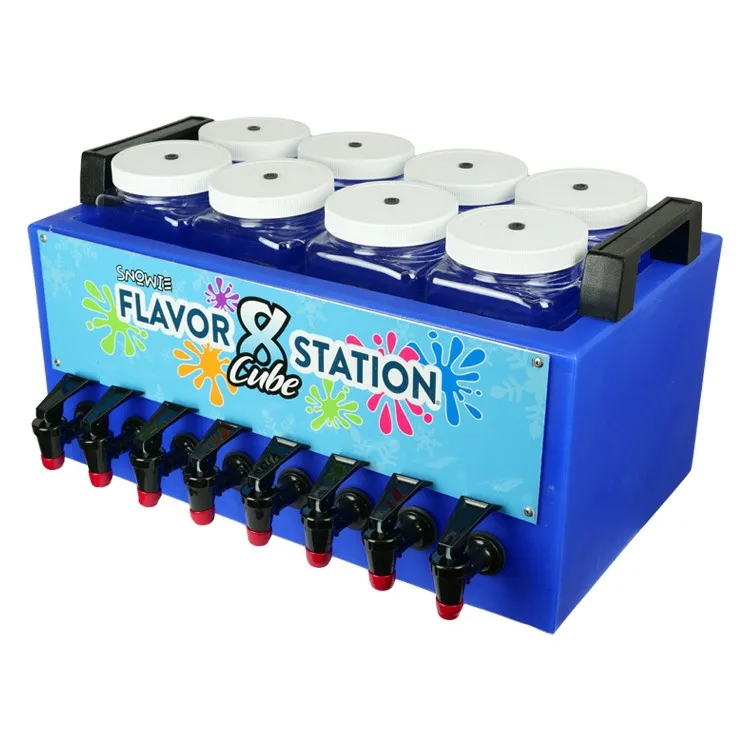
Cube 8 Flavor Station
Packing the high-volume crowd pulling power of a full-sized syrup station into a tiny 18” x 13.5” x 10” footprint, the Cube 8 lets you serve 8 crowd-pleasing flavors without taking over your counter space. Equipped with 8 wide-lid quart jugs, dual-side access, and integrated transport rollers, this lightweight unit setup makes mobile vending completely effortless. Give your customers the freedom to customize their treats, slash your labor costs, and keep your lines moving fast.
Next Chapter
Chapter 5: Permits, Licenses & Insurance — What Does It Really Cost to Operate Legally?
We’ll cover one of the least exciting—but most important—parts of starting a shaved ice business: business registration, food permits, health department requirements, event permits, sales tax, insurance, and the costs that new vendors often forget to budget for.
Chapter 5: Permits, Licenses & Insurance — What Does It Really Cost to Operate Legally?
There is one part of starting a shaved ice business that isn’t nearly as exciting as choosing your machine, designing your cart, or picking your syrup flavors.
But ignoring it can become one of the most expensive mistakes you make.
Legal and regulatory requirements.
Before you start serving customers, you need to understand what your city, county, state, or country requires from a food business operating in your area.
And there’s an important rule here:
Never assume that because another shaved ice vendor is operating a certain way, you can operate the same way.
Requirements can vary dramatically depending on where you live and how your business operates.
A vendor selling shaved ice from a permanent storefront may have completely different requirements from someone operating a mobile cart at festivals.
Start With Your Business Structure
Before you begin spending heavily on equipment, determine how you are going to legally structure the business.
Depending on where you operate, you may have options such as:
- Sole proprietorship
- Limited liability company (LLC)
- Partnership
- Corporation
For many small entrepreneurs, the decision often comes down to simplicity, liability considerations, taxes, and administrative requirements.
An LLC, for example, can provide a formal business structure, but it doesn’t automatically mean you’re protected from every type of liability.
Your exact options and requirements depend on your location.
The important point is to establish the business properly before you start treating it like a serious commercial operation.
Business Registration
Your local government may require you to register your business.
Depending on your location, you might need:
- Business registration
- Local business license
- Trade name/DBA registration
- Tax registration
- Seller’s permit
- Food establishment registration
The terminology varies.
That’s why searching for “shaved ice business license” isn’t enough.
You need to find the requirements that apply specifically to your location and your business model.
Food Permits Are a Different Issue
Here’s where things get interesting.
Selling food or beverages can trigger health and food-safety regulations.
And shaved ice is still a food product.
Even though the ingredients may be simple, you’re handling:
- Ice
- Syrups
- Cups
- Food-contact surfaces
- Equipment
- Potential toppings
- Water
- Cleaning chemicals
Your health department may have requirements related to sanitation, handwashing, water supply, equipment, storage, food handling, and approved operating locations.
The exact requirements vary by jurisdiction.
So before you buy a cart or trailer, find out what your local health authority requires.
This should happen before the purchase—not afterward.
Don’t Make the Expensive Equipment Mistake
Imagine you spend $20,000 building a beautiful shaved ice trailer.
Then you discover that the trailer doesn’t meet a local requirement.
Now you’re looking at modifications.
Potentially expensive modifications.
Maybe you need:
- Additional sinks
- Different plumbing
- A larger water tank
- Specific food-contact surfaces
- Additional refrigeration
- Different electrical components
- Additional handwashing facilities
Suddenly, the “$20,000 trailer” isn’t $20,000 anymore.
This is why experienced food entrepreneurs research regulations before purchasing equipment.
Ask These Questions Before You Buy
Contact the appropriate local authorities and ask questions such as:
Do I need a food establishment permit?
Do I need a mobile food vendor permit?
Does my cart or trailer need to be inspected?
What type of handwashing station is required?
What type of water system is required?
Can I operate at private events?
Can I operate at public events?
Can I prepare or store supplies at home?
Are there restrictions on where I can operate?
Do I need event-specific permits?
What are the inspection requirements?
What are the renewal dates?
These questions can save you thousands of dollars.
Your Location Can Change Everything
A shaved ice business operating at a private birthday party may have different requirements from a vendor operating every Saturday on a public sidewalk.
Similarly, operating from a permanent location can involve different zoning and permitting considerations than operating from a mobile cart.
This is why there’s no universal startup cost for permits.
One entrepreneur might spend relatively little.
Another might need several permits, inspections, licenses, and fees before making the first sale.
Your location determines your legal startup costs.
Insurance: Don’t Skip This
Now let’s talk about something else new entrepreneurs sometimes overlook:
Business insurance.
Insurance isn’t just another annoying expense.
It’s part of protecting the business you’ve worked to build.
Depending on your situation, you may want to investigate coverage such as:
- General liability insurance
- Product liability coverage
- Commercial auto insurance
- Equipment coverage
- Property coverage
- Workers’ compensation where required
The exact coverage you need depends on your business structure, employees, equipment, vehicle, operating locations, and local requirements.
And event organizers may require proof of insurance before allowing you to participate.
That’s another reason to investigate insurance early.
What Does Shaved Ice Business Insurance Cost?
There’s no single price.
Insurance premiums depend on factors such as:
- Location
- Revenue
- Business type
- Coverage limits
- Claims history
- Number of employees
- Vehicles
- Equipment
- Events served
- Policy type
For budgeting purposes, many new entrepreneurs should expect insurance to be an ongoing business expense rather than something they pay once and forget about.
Get actual quotes for your specific business before finalizing your startup budget.
Event Fees Are Another “Permit-Like” Expense
Here’s something new vendors sometimes forget.
Even if you’re legally allowed to sell shaved ice, the event itself may charge you to participate.
A festival might charge:
$50 vendor fee.
Another might charge:
$250.
A major event could charge substantially more.
Some events may also take a percentage of sales.
Others may require vendors to carry specific insurance limits.
So don’t automatically assume:
“There’s an event with 5,000 people, so I should definitely attend.”
The event might have excellent traffic but terrible economics.
Traffic Doesn’t Equal Profit
Imagine an event has 10,000 attendees.
Sounds incredible.
But suppose:
- Vendor fee = $1,000
- Travel = $200
- Labor = $300
- Supplies = $500
- Other expenses = $200
You’ve already committed $2,200 before considering some other overhead.
If you sell $2,500, you didn’t have a great event.
You barely covered your expenses.
This is why successful vendors don’t simply chase crowds.
They chase profitable crowds.
Sales Tax and Taxes
Taxes are another area where you don’t want to guess.
Depending on your jurisdiction and what you’re selling, you may have obligations related to:
- Sales tax
- Business taxes
- Income taxes
- Payroll taxes
- Local taxes
Tax rules can vary significantly.
And food products may receive different treatment depending on the location and circumstances.
If you’re unsure, talk with a qualified tax professional familiar with small food businesses in your jurisdiction.
It’s much easier to set up proper bookkeeping from day one than to reconstruct a year’s worth of transactions later.
Keep Business Money Separate
This is one of the simplest pieces of advice in the entire guide.
Separate your business finances from your personal finances.
Open a dedicated business bank account when appropriate for your business structure and situation.
Use it for:
- Equipment purchases
- Inventory
- Vendor fees
- Marketing
- Insurance
- Business income
This makes tracking your business much easier.
It also gives you a clearer picture of whether the business is actually making money.
If you constantly mix personal and business transactions, your financial records can become a nightmare.
Keep Every Receipt
Save receipts for:
- Ice shavers
- Carts
- Trailers
- Syrup
- Cups
- Equipment
- Repairs
- Advertising
- Fuel
- Event fees
- Insurance
- Business services
Good bookkeeping isn’t exciting.
But when tax time comes around, you’ll be very glad you kept organized records.
Create a Compliance Folder
Here’s a simple system you can use.
Create a digital folder called:
SHAVED ICE BUSINESS — LEGAL & COMPLIANCE
Inside it, keep:
Business registration
Licenses
Food permits
Inspection documents
Insurance certificates
Vendor agreements
Event permits
Tax documents
Equipment invoices
Important renewal dates
This takes very little effort.
But it can save hours of searching later.
Budget for Renewals
Another common mistake is budgeting for the first year and forgetting that many licenses and permits have renewal costs.
Create a calendar with:
- Permit expiration dates
- Insurance renewal dates
- Business registration deadlines
- Tax deadlines
- Vehicle registration
- Equipment inspections
Don’t wait until something expires.
Set reminders months in advance.
The Real Lesson
Permits and insurance aren’t obstacles standing between you and your business.
They’re part of the cost of operating a legitimate business.
If you’re serious about building something that lasts, you want to know exactly what you’re allowed to do, where you’re allowed to do it, and what protection you have if something goes wrong.
And remember:
The rules are location-specific.
A guide like this can help you understand the categories of costs to plan for, but you should always verify the actual requirements with the appropriate authorities where you intend to operate.
Your Growing Startup Budget
At this point, you’ve already identified several major expenses:
Equipment
Ice shaver, cart, trailer, tables, tents, storage and related equipment.
Inventory
Ice, syrups, cups, spoons, napkins and other supplies.
Legal
Business registration, licenses, permits and inspections.
Protection
Insurance and other risk-management expenses.
Operations
Transportation, storage, electricity, water and other operating costs.
But there’s still another major piece of the puzzle.
How are people going to find you?
You can have the best shaved ice in town, the best machine, and the most beautiful cart—but if nobody knows you’re there, none of it matters.
Next Chapter
Chapter 6: Marketing Your Shaved Ice Business — How Much Should You Spend to Get Customers?
We’ll break down signage, social media, Facebook, Instagram, Google, local marketing, flyers, grand openings, event marketing, referral programs, and how to start generating customers without blowing your entire startup budget on advertising.
Chapter 6: Marketing Your Shaved Ice Business — How Much Should You Spend to Get Customers?
You can have the best shaved ice machine.
You can have 20 incredible flavors.
You can have a beautiful cart, professional branding, and a menu that makes people hungry just looking at it.
But none of that matters if customers don’t know you exist.
Marketing is how you turn an unknown shaved ice business into a place people recognize, remember, and recommend.
And the good news is that you don’t need to spend thousands of dollars on advertising to get started.
In fact, one of the biggest advantages of a shaved ice business is that your product is highly visual.
Bright colors.
Big cups.
Fluffy ice.
Colorful syrup.
Happy customers.
Summer events.
Those things are naturally made for social media.
Your job is to turn that visual appeal into attention—and then turn attention into sales.
Start With Your Brand
Before spending money on advertising, make sure people can recognize your business.
Your brand should have a consistent:
- Business name
- Logo
- Color scheme
- Menu design
- Signage
- Social media appearance
- Packaging
- Customer experience
You don’t need a giant branding agency.
You need consistency.
If your cart is one style, your Facebook page looks completely different, and your menu uses another logo, customers have a harder time remembering you.
A recognizable brand is an asset.
Your Sign Is One of Your Best Marketing Tools
If you’re operating at a busy event, your sign may be more valuable than a Facebook advertisement.
Think about how customers behave.
They’re walking past dozens of vendors.
They’re talking.
They’re looking at their phones.
They’re watching their kids.
They’re deciding where to spend their money.
Your sign has only a few seconds to communicate:
What are you selling?
Why should I care?
How much does it cost?
A strong sign might simply say:
SHAVED ICE
10+ FLAVORS
STARTING AT $5
COLD. COLORFUL. DELICIOUS.
The exact message should fit your brand and pricing.
But don’t make customers work to figure out what you’re selling.
Make Your Menu Easy to Read
Your menu is another marketing tool.
Don’t fill it with tiny text and 40 different choices.
A customer should be able to look at your menu and understand their options almost immediately.
For example:
Choose Your Size
Small — $4
Regular — $5
Large — $6
Choose Your Flavor
Cherry
Blue Raspberry
Watermelon
Grape
Strawberry
Mango
Pineapple
Blue Coconut
Then perhaps offer combinations or premium options.
The easier the decision, the faster your line moves.
And faster lines can mean more sales.
Photography Is Marketing
You don’t necessarily need a professional photographer.
A modern smartphone can produce excellent marketing photos when used properly.
Take pictures of:
- Finished shaved ice
- Your cart
- Your team
- Customers enjoying the product—with permission
- New flavors
- Events
- Behind-the-scenes preparation
- Flavor combinations
- Special promotions
And don’t only take pictures of your product sitting on a table.
Show people enjoying it.
A photograph of a colorful shaved ice cup next to a smiling customer at a summer festival tells a story.
That story is marketing.
Social Media Can Become Your Free Billboard
Platforms such as Facebook, Instagram, and TikTok can help local food businesses get discovered.
But don’t approach social media as:
“I need to post something today.”
Instead, think:
“What would make someone want to visit us?”
That changes what you post.
Instead of:
“We’re open today.”
Try showing:
A close-up of a giant blue raspberry shaved ice being made.
Or:
A video of the ice being shaved.
Or:
A customer choosing between 12 flavors.
Or:
Your cart arriving at a busy summer event.
You’re not just announcing that you’re open.
You’re creating desire.
Build Anticipation Before Your First Day
Don’t wait until opening day to start marketing.
Start building attention beforehand.
For example:
Two Weeks Before Opening
Introduce the business.
Show the logo.
Show your equipment.
Tell people what you’re building.
One Week Before Opening
Reveal your flavors.
Show the cart.
Announce your opening date.
Three Days Before Opening
Post a countdown.
Show behind-the-scenes preparation.
Day Before
Make the announcement impossible to miss.
Opening Day
Post photos and videos throughout the day.
After Opening
Show customers enjoying the product.
This creates momentum.
Your Grand Opening Doesn’t Have to Be Expensive
You don’t necessarily need a huge event with a DJ, balloons, and thousands of dollars in advertising.
A simple grand opening can work.
Consider:
Opening-day special
Free topping
Buy-one-get-one promotion
First 50 customers receive a discount
Free sample-size shaved ice
Again, the specific promotion should fit your pricing and margins.
The objective is to give people a reason to try you.
Once they’ve tried the product, your quality takes over.
Don’t Discount Everything
Here’s a warning.
New businesses sometimes believe the only way to attract customers is to offer huge discounts.
That can be dangerous.
If your regular product is $5 and you’re constantly selling it for $2, customers may start waiting for discounts.
Instead, create promotions strategically.
You might offer:
A limited-time opening special.
A loyalty reward.
A free upgrade.
A family deal.
A referral reward.
You want customers to see the promotion as an opportunity—not learn that your regular price is meaningless.
Google Can Be Extremely Valuable
Local search matters.
When someone searches for:
“shaved ice near me”
“snow cones near me”
“shaved ice business near me”
“snow cone catering”
you want your business to have a chance of appearing.
Set up and properly maintain your local business presence on the major search platforms available in your market.
Make sure your business information is accurate.
Include:
- Business name
- Phone number
- Website
- Hours
- Location
- Photos
- Menu
- Services
And keep the information updated.
A customer who sees you’re open online but arrives to find you closed is unlikely to be impressed.
Your Website Doesn’t Need to Be Complicated
You don’t need a massive website when you’re starting.
A simple website can answer the questions customers actually have:
What do you sell?
Where are you located?
When are you open?
How much does it cost?
Can I book you for an event?
How do I contact you?
What flavors do you offer?
That’s enough to begin.
And if you’re targeting private events, make sure your website makes it extremely easy for someone to request a quote.
Private Events Can Be a Marketing Gold Mine
Here’s where shaved ice gets particularly interesting.
You don’t have to rely exclusively on random foot traffic.
You can sell events.
Think about:
- Birthday parties
- Weddings
- Graduation parties
- School events
- Church events
- Company picnics
- Employee appreciation events
- Community festivals
- Sports tournaments
- Apartment events
- Family reunions
Instead of waiting for customers to walk past your cart, you’re getting paid to bring the experience directly to them.
That’s a completely different sales model.
Create an Event Package
Instead of saying:
“We sell shaved ice.”
you can say:
“We bring a complete shaved ice experience to your event.”
Your package could include:
- Shaved ice service
- Multiple flavors
- Cups and spoons
- Attendant
- Setup
- Cleanup
The exact package depends on your business.
But packaging your service makes it easier for customers to understand what they’re buying.
Word of Mouth Is Powerful
The cheapest customer is often the one someone else sends you.
Imagine a parent books you for a birthday party.
Twenty children get shaved ice.
Several parents take pictures.
Someone asks:
“Who did this?”
Your customer gives them your business card.
Now you’ve potentially gained another lead without buying another advertisement.
That’s why customer experience matters so much.
Every event can become your next marketing campaign.
Put Your Website on Everything
Your website or booking page should appear wherever customers might look for you.
For example:
- Business cards
- Menu boards
- Flyers
- Event signs
- Social media profiles
- Vehicle graphics
- Packaging
- Receipts
A simple QR code can make this even easier.
Someone sees your cart.
They scan the code.
They visit your website.
They discover you offer birthday-party catering.
Suddenly a walk-up customer can become an event customer.
Don’t Forget Email and Text Marketing
Once you have customers, you have something extremely valuable:
A customer list.
If customers voluntarily sign up to receive marketing messages, you can potentially notify them about:
- New locations
- Seasonal flavors
- Promotions
- Events
- Special offers
- Catering availability
Always follow the applicable consent, privacy, and messaging laws when collecting and using customer contact information.
The important idea is simple:
Don’t let every customer relationship end when the cup is empty.
Give customers a reason to come back.
Build a Loyalty Program
Shaved ice is naturally suited for repeat business.
You might create something simple:
Buy 9, get the 10th free.
Or:
Earn points toward a free shaved ice.
Or:
Come back five times and receive a free upgrade.
The exact structure depends on your margins.
The psychology is what matters.
You’re giving customers a reason to return.
How Much Should You Spend on Marketing?
There’s no universal number.
A new shaved ice business might begin with a relatively small marketing budget and increase spending as revenue grows.
Your early marketing budget could go toward:
Signage
Business cards
Menu boards
Website
Local advertising
Social media content
Event promotions
Branded materials
The key is tracking what actually produces customers.
Don’t spend $500 on advertising just because someone tells you advertising is important.
Ask:
“How many customers did that $500 produce?”
Then ask:
“How much did those customers spend?”
That’s how you turn marketing into a measurable investment.
The $100 Marketing Challenge
Here’s a simple exercise for a new business.
Imagine you have exactly $100 to market your shaved ice business.
Don’t immediately put all $100 into online ads.
Instead, think creatively.
You might spend some of it on:
- Better signage
- Printed materials
- A small opening promotion
- Photography
- Local promotional materials
Then track the results.
Which activity generated attention?
Which generated actual customers?
Which generated repeat customers?
That information is more valuable than blindly spending thousands of dollars.
Track Every Marketing Source
Ask customers:
“How did you hear about us?”
Give them simple choices:
- Friend
- Event
- Flyer
- Website
- Other
You can even add the question to your checkout or booking process.
After a few months, you may discover something surprising.
Maybe you thought Facebook was your biggest source of customers.
But actually, referrals generate 60% of your business.
Now you know where to focus.
Marketing Isn’t About Being Everywhere
You don’t need to dominate every social platform.
You need to be visible where your customers actually are.
For a local shaved ice business, that could mean:
Google + Facebook + Instagram + local community groups + your website.
For another business, it could be completely different.
Start small.
Do a few things well.
Then expand.
Turn Every Customer Into a Marketing Opportunity
Think about the customer experience from beginning to end.
They see your sign.
They approach your cart.
They choose a flavor.
They watch the ice being shaved.
You add syrup.
They receive the finished product.
They take a picture.
They taste it.
They smile.
They tell someone:
“You have to try this.”
That’s marketing.
Your goal isn’t simply to sell a cup.
Your goal is to create an experience people want to talk about.
Your Marketing Budget Should Grow With Your Business
Don’t feel pressured to spend thousands before you have customers.
Start with:
Great product.
Professional appearance.
Strong local presence.
Consistent social media.
Excellent customer service.
Word of mouth.
Then reinvest.
As sales increase, you can experiment with:
- Paid social advertising
- Search advertising
- Sponsorships
- Influencer partnerships
- Event sponsorships
- Vehicle graphics
- Larger signs
- Professional photography
- Local promotions
The business should gradually become louder as the revenue becomes stronger.
The Real Marketing Advantage of Shaved Ice
Here’s something powerful.
A shaved ice business doesn’t require you to convince people that they need shaved ice.
When it’s hot outside and someone sees a giant cup of colorful, fluffy ice dripping with flavor?
They already understand.
You’re selling something that is:
Visual.
Affordable.
Fun.
Shareable.
Seasonal.
Family-friendly.
That’s a fantastic foundation for local marketing.
Your job is simply to put the product in front of the right people at the right time.
And when you do that consistently, your marketing can become one of the biggest growth engines in the business.
Next Chapter
Chapter 7: How Much Should You Charge for Shaved Ice?
We’ll get into one of the questions every new vendor eventually asks:
“What should I charge for a cup?”
We’ll break down pricing, serving sizes, ingredient costs, gross margins, premium flavors, combo pricing, event pricing, catering packages, and how to avoid the dangerous mistake of underpricing your shaved ice just to compete.
Chapter 7: How Much Should You Charge for Shaved Ice? Pricing for Profit
One of the easiest ways to make a shaved ice business look successful while quietly losing money is to price your product incorrectly.
You can have a line of customers all afternoon and still discover at the end of the month that there isn’t much money left.
Why?
Because sales aren’t the same thing as profit.
If you sell 500 shaved ice cups at $4 each, you’ve generated $2,000 in revenue.
That sounds great.
But you didn’t necessarily make $2,000.
You still have to pay for supplies, labor, event fees, transportation, insurance, equipment, taxes, and everything else required to operate the business.
That’s why pricing deserves serious attention.
Start With Your Cost Per Serving
Before choosing a price, determine approximately how much it costs you to produce one shaved ice.
Your calculation should include your direct product costs.
For example:
| Cost | Example Per Serving |
|---|---|
| Ice | $0.10 |
| Syrup | $0.25 |
| Cup | $0.12 |
| Spoon | $0.04 |
| Napkin | $0.02 |
| Direct cost | $0.53 |
These are illustrative numbers, not universal costs.
Now suppose you sell the shaved ice for $5.
Your initial contribution before other expenses is:
$5.00 − $0.53 = $4.47
But don’t call that $4.47 “profit” yet.
You still have other costs.
Revenue Isn’t Profit
This distinction is critical.
Imagine you sell:
100 cups × $5 = $500 revenue
Your direct supply costs might be:
100 × $0.53 = $53
That leaves:
$447
But now you might have to pay:
- Employee wages
- Event fees
- Fuel
- Insurance
- Payment processing
- Equipment maintenance
- Marketing
- Storage
- Permits
- Taxes
- Other overhead
Your actual profit could be dramatically lower.
This is why you should track both revenue and expenses.
What Should a Shaved Ice Cost?
There isn’t one universal price.
A shaved ice business in a small town may have a different price structure from one operating at a major tourist attraction.
A private birthday-party business may price differently from a festival vendor.
A premium gourmet shaved ice brand may charge differently from a simple snow-cone stand.
Your price needs to reflect your:
Market
Location
Serving size
Product quality
Operating costs
Competition
Customer expectations
Brand positioning
A Simple Starting Price Structure
Many businesses use multiple sizes to give customers choices.
For example:
Small
$4
Regular
$5
Large
$6
These are examples only.
Your actual pricing should be based on your local market and costs.
The benefit of multiple sizes is that customers can choose according to their budget.
And there’s another psychological advantage.
If your menu only says:
Shaved Ice — $5
there’s no comparison.
But if customers see:
Small — $4
Regular — $5
Large — $6
the regular option can feel like a reasonable middle choice.
Don’t Make Your Menu Too Complicated
New businesses sometimes try to create a restaurant-sized menu.
That’s unnecessary.
You might offer:
Small
Regular
Large
Then allow customers to choose their flavor.
You can add:
Extra flavor
Premium toppings
Combo flavors
Specialty creations
as your business develops.
Simple menus can improve ordering speed.
And speed matters when there’s a line.
Charge More for Premium Products
Not every product has to have the same price.
You might create specialty combinations such as:
Tropical Paradise
Pineapple + Mango + Coconut
Blue Storm
Blue Raspberry + Lemon-Lime
Strawberry Sunset
Strawberry + Orange + Watermelon
Give them memorable names.
Now you’re not just selling ingredients.
You’re selling a signature experience.
Depending on your costs and market, specialty creations could carry a higher price.
Premium Toppings Can Increase Average Order Value
You can potentially increase the value of each transaction with optional extras.
Depending on your concept and local food regulations, these could include:
- Whipped topping
- Candy
- Fruit
- Sweet cream
- Gummy candy
- Sprinkles
- Specialty sauces
For example:
Regular shaved ice — $5
Premium shaved ice — $6
Signature specialty — $7
The customer gets more choice.
You get a higher average transaction.
But don’t add toppings simply because you can.
Every additional ingredient creates another inventory requirement.
Your Goal Isn’t the Cheapest Price
This is one of the most important lessons.
You don’t want to be known as:
“The cheapest shaved ice in town.”
You want to be known as:
“The shaved ice everyone wants.”
There’s a difference.
Competing entirely on price can become a race to the bottom.
If another vendor charges $4, you charge $3.50.
They lower theirs to $3.
You lower yours to $2.50.
Eventually, everyone is working harder for less money.
Instead, compete on:
Taste
Texture
Presentation
Experience
Service
Brand
Convenience
Location
Speed
Variety
Don’t Copy Your Competitor’s Price Blindly
You don’t know their numbers.
Maybe they:
- Own their equipment outright
- Have lower rent
- Buy syrup wholesale
- Sell enormous volumes
- Have cheaper labor
- Operate from a different jurisdiction
- Have been in business for ten years
Their $4 price doesn’t necessarily work for you.
Your business needs to support your costs.
Event Pricing Is Different
Here’s where pricing gets interesting.
If someone wants you to attend their birthday party, you’re not simply selling individual cups.
You’re providing a service.
You may have:
- Travel time
- Setup time
- Cleanup
- Employee labor
- Equipment transportation
- Minimum booking requirements
Instead of charging only:
$5 per cup
you could potentially structure an event package around:
A minimum number of servings
or
A flat event fee
or
A combination of both
For example, an illustrative package could look like:
Two-hour shaved ice service
Up to 50 guests
10 flavors
Setup included
$350
Again, that’s an example—not a universal recommended price.
Your actual price needs to account for your costs, local market, event length, guest count, travel, and desired margin.
Minimums Protect Your Time
Imagine someone asks you to drive 45 minutes to serve a small private party.
They want:
20 shaved ice servings.
At $5 each, that’s only:
$100 revenue.
But you might spend:
- 90 minutes driving
- 30 minutes setting up
- 1 hour serving
- 30 minutes cleaning
- Fuel
- Supplies
Suddenly that $100 doesn’t look very attractive.
This is why event businesses often establish minimum booking amounts.
Your time has value.
Calculate Your Break-Even Point
Here’s a powerful number every entrepreneur should understand.
Your break-even point is how much you need to sell before you’ve covered your costs.
Suppose your monthly fixed expenses total:
$1,500
And your average contribution per serving after direct product costs is:
$4
You’d need approximately:
$1,500 ÷ $4 = 375 servings
to cover those fixed expenses.
Every sale after that contributes toward profit, taxes, additional expenses, and reinvestment.
This is a simplified example, but it shows why knowing your numbers matters.
What If You Want to Make $5,000 a Month?
Let’s make the math practical.
Suppose your average selling price is:
$5
And you sell:
1,000 cups per month
Your revenue is:
$5,000
But that doesn’t mean you’ve earned $5,000.
If your total operating costs consume $2,500, your remaining operating profit before taxes and other considerations would be $2,500.
Want to generate more?
You can increase:
Customers
Average order value
Operating days
Event bookings
Product prices
Efficiency
You don’t always need thousands more customers.
Sometimes you need better economics per customer.
Increase Average Order Value
Suppose a customer buys one regular shaved ice for $5.
That’s a $5 transaction.
But what if you offer:
Extra flavor +$0.75
Premium topping +$1
Now the same customer might spend:
$6.75
Multiply that across hundreds of customers.
Small increases can become significant.
Create Family and Group Options
Shaved ice is naturally suited for groups.
Consider packages such as:
Family Pack
Party Pack
Event Package
School Event Package
Corporate Package
These can simplify purchasing for customers.
Instead of someone calculating how much 75 individual servings will cost, you can provide a clear package.
That’s easier to sell.
Don’t Forget Catering
Catering can become one of the most profitable parts of a shaved ice business because you’re selling a service, not simply a cup of ice.
Instead of depending entirely on walk-up traffic, you can actively pursue:
- Birthday parties
- Weddings
- Corporate events
- School functions
- Graduation parties
- Community events
- Sports events
You can also potentially require deposits for larger bookings, depending on your policies and local laws.
Deposits Protect Your Calendar
Imagine someone books your business for a Saturday afternoon.
You turn down another event.
Then Friday night, they cancel.
You’ve lost the opportunity to serve someone else.
A deposit can help protect your schedule.
Your cancellation and deposit policy should be clearly communicated and structured appropriately for your location and business.
Raise Prices When Your Business Earns It
You don’t have to keep the same prices forever.
Costs change.
Syrup costs change.
Packaging costs change.
Labor costs change.
Event fees change.
Fuel changes.
And your brand can become more valuable.
If you’ve built a strong reputation and demand continues increasing, you may eventually be able to charge more.
Don’t be afraid to review your prices periodically.
Watch Your Numbers Every Month
At the end of each month, calculate:
Total revenue
Number of servings sold
Average sale
Direct product cost
Labor
Event fees
Transportation
Marketing
Other expenses
Net operating profit
Then compare those numbers to the previous month.
You’re looking for trends.
Are customers buying more?
Are costs increasing?
Which events are profitable?
Which flavors sell?
Which promotions work?
Which locations perform best?
Your numbers are telling you what the business needs next.
The Best Price Is the One Your Business Can Sustain
There is no magic shaved ice price.
A $4 cup can be profitable.
A $5 cup can be profitable.
A $7 cup can be profitable.
The question is whether the price works with your costs and your market.
Don’t choose a price because it sounds attractive.
Choose a price because the numbers support it.
And don’t forget the most important part:
Customers need to believe the product is worth the price.
If your shaved ice looks amazing, tastes great, your service is fast, your cart is clean, and the experience is memorable, customers aren’t simply comparing your $5 cup to another vendor’s $5 cup.
They’re comparing the experience.
That’s where strong branding and great execution become extremely valuable.
Your Pricing Formula
Before you finalize your menu, know these numbers:
Cost per serving
Labor allocation
Overhead allocation
Payment processing
Target profit
=
Required selling price
Then compare that price with your local market.
If your required price is much higher than what customers are willing to pay, don’t automatically slash your price.
Instead, look for ways to improve the business:
Lower supply costs.
Increase efficiency.
Increase average order value.
Improve your product.
Target a better market.
Sell higher-value events.
That’s how you build a sustainable business.
Next Chapter
Chapter 8: Can a Shaved Ice Business Actually Make Money?
Now that we’ve covered startup costs, equipment, supplies, permits, marketing, and pricing, it’s time to put everything together.
We’ll build realistic examples showing what a shaved ice business could make selling 50, 100, 200, or 500 cups, what expenses can eat into those sales, how to calculate potential profit, and what it could take to turn a seasonal shaved ice stand into a serious business.
Chapter 8: Can a Shaved Ice Business Actually Make Money?
This is the question almost every new entrepreneur eventually asks:
“Can I actually make money selling shaved ice?”
The short answer is yes, it can be a profitable business model.
But profitability doesn’t happen simply because shaved ice has a low ingredient cost.
You still need customers.
You need the right location.
You need efficient equipment.
You need good pricing.
You need controlled expenses.
And you need to understand the difference between revenue and profit.
A shaved ice business can generate impressive sales during a busy summer event—but if you’re paying too much for inventory, labor, event fees, transportation, or equipment, those sales don’t necessarily translate into much money in your pocket.
So let’s put some numbers together.
The Basic Shaved Ice Profit Equation
At its simplest:
Revenue − Expenses = Profit
Your revenue comes from selling:
- Shaved ice
- Specialty flavors
- Toppings
- Larger sizes
- Party packages
- Catering
- Other products
Your expenses can include:
- Ice
- Syrup
- Cups
- Spoons
- Labor
- Event fees
- Transportation
- Insurance
- Marketing
- Equipment
- Maintenance
- Permits
- Storage
- Taxes
The goal isn’t simply to sell more.
The goal is to sell profitably.
Scenario 1: Selling 50 Cups
Let’s start small.
Suppose you sell:
50 cups
at an average price of:
$5
Your revenue is:
50 × $5 = $250
Now imagine your direct product cost averages:
$0.75 per cup
Your product costs are:
50 × $0.75 = $37.50
That leaves:
$212.50
before other expenses.
But you may still have:
- Event fees
- Labor
- Transportation
- Payment processing
- Insurance
- Marketing
- Equipment costs
If you spent $100 on an event fee and transportation, your actual result could look very different.
This is why a small sales volume may not be enough to make an event worthwhile.
Scenario 2: Selling 100 Cups
Now let’s double the sales.
100 cups × $5 = $500 revenue
At $0.75 direct product cost:
100 × $0.75 = $75
That leaves:
$425
before other operating expenses.
Notice something interesting.
Your revenue doubled.
But many of your costs may not double.
Your equipment didn’t necessarily cost twice as much.
Your insurance didn’t necessarily double.
Your cart didn’t become twice as expensive.
Your business can become more efficient as sales volume increases.
This is one of the reasons higher-volume events can be attractive.
Scenario 3: Selling 200 Cups
Now imagine a strong event.
200 cups × $5 = $1,000 revenue
Direct product cost:
200 × $0.75 = $150
Remaining:
$850
before labor, event fees, transportation, payment processing, overhead, and taxes.
If your total additional event expenses were $300, you might have:
$550 remaining
before other business-level expenses and taxes.
Again, these are illustrations—not promises.
Your actual numbers can be very different.
But now you can start seeing the economics of volume.
Scenario 4: Selling 500 Cups
Now let’s imagine a major event.
500 cups × $5 = $2,500 revenue
Direct product cost:
500 × $0.75 = $375
Remaining:
$2,125
before other expenses.
Suppose the event requires:
$500 vendor fee
$300 labor
$200 transportation and miscellaneous expenses
That would leave:
$1,125
before broader overhead and taxes.
That’s why a successful event can potentially generate significant cash flow in a short period.
But there’s a catch.
Can you actually serve 500 customers?
Your Machine Has a Sales Ceiling
This is where equipment becomes connected to profitability.
Imagine you have 500 customers wanting shaved ice.
But your equipment and serving process can only comfortably handle 50 customers per hour.
A five-hour event might be manageable.
But if 300 people show up during a two-hour window, you have a problem.
Customers may leave.
Lines become too long.
Employees become overwhelmed.
Product quality can suffer.
And your potential revenue disappears because you couldn’t process the demand.
That’s why capacity matters.
Your equipment should match your expected sales volume.
Revenue Per Hour Is an Important Number
Here’s another metric worth tracking:
Revenue per operating hour.
Suppose you work a four-hour event and sell:
200 cups × $5 = $1,000
That’s:
$250 revenue per event hour
But don’t stop there.
You also need to consider:
- Setup time
- Cleanup time
- Driving
- Loading
- Unloading
If the event takes four hours but requires another three hours of total preparation and travel, your true time commitment is seven hours.
Now your revenue per total work hour is much lower.
This is why experienced vendors track the entire event, not just the serving period.
Your Location Can Determine Your Income
The same shaved ice business can perform dramatically differently in different locations.
Imagine two vendors.
Vendor A
Sets up in a low-traffic area.
Sells:
40 cups
Vendor B
Sets up near a busy family event.
Sells:
300 cups
They may have essentially the same:
- Machine
- Syrup
- Cups
- Brand
- Pricing
But their revenue is completely different.
That’s why location is often one of the biggest variables in a mobile food business.
Don’t Confuse Busy With Profitable
A long line looks impressive.
But ask:
How much did you pay to be there?
A festival might have thousands of people.
But if the vendor fee is extremely high and there are 20 competing dessert vendors, your sales might disappoint.
Meanwhile, a smaller community event with lower competition might produce better profits.
You need to track the numbers.
Track Every Event
Create a simple event spreadsheet.
| Event | Revenue | Supplies | Labor | Fee | Travel | Net |
|---|---|---|---|---|---|---|
| Event A | $1,200 | $180 | $250 | $200 | $75 | $495 |
| Event B | $650 | $100 | $180 | $300 | $100 | -$30 |
| Event C | $1,500 | $225 | $300 | $150 | $75 | $750 |
The numbers above are examples.
But imagine what happens after you’ve tracked 20 events.
You begin to see patterns.
Maybe:
Birthday parties are highly profitable.
Large festivals aren’t worth the vendor fee.
Saturday afternoons outperform weekday mornings.
One location produces twice the sales of another.
Now you’re making business decisions using data.
The Power of Repeat Customers
A first-time customer is valuable.
A repeat customer can be even more valuable.
Imagine someone spends:
$5
with you once.
That’s good.
But if they return ten times during the season, they’ve spent:
$50
with you.
Now multiply that by 100 loyal customers.
That’s:
$5,000
in lifetime sales from a relatively small customer base.
This is why customer experience matters.
Build a Customer Base, Not Just a Crowd
A crowd gives you today’s sales.
A customer base can give you sales for months or years.
Capture attention with:
- Great product
- Great service
- Memorable branding
- Loyalty programs
- Social media
- Email/SMS marketing with proper consent
- Event bookings
- Referral programs
The goal is to give people a reason to remember you.
Catering Can Change the Economics
Walk-up sales are only one part of the opportunity.
Imagine someone pays you:
$500
to serve shaved ice at a birthday party.
You know the date.
You know the location.
You know the expected number of guests.
You can plan your inventory.
You can plan your labor.
You can plan your travel.
That’s different from parking somewhere and hoping customers appear.
Catering gives you predictability.
And predictable revenue can be extremely valuable.
Build Multiple Revenue Streams
As your business develops, consider additional revenue opportunities.
You might offer:
Walk-Up Sales
Customers purchase individual servings.
Private Parties
You bring your service to the customer.
Corporate Events
Companies hire you for employee or customer events.
School Events
Large groups can create significant volume.
Festivals
High traffic can produce substantial sales if the economics work.
Catering Packages
Customers pay for a predefined service package.
Branded Merchandise
Some businesses eventually add shirts, cups, or other branded items.
You don’t need all of these.
Start with one.
Then add another when the first one is working.
Seasonal Doesn’t Mean Small
A common misconception is that a shaved ice business is automatically a tiny summer side hustle.
It doesn’t have to be.
A successful seasonal business can generate significant revenue during its peak months.
The key is maximizing the season.
If your business operates heavily for six months, you want those six months to count.
That means:
Better locations.
More profitable events.
Higher average transactions.
Repeat customers.
Catering.
Efficient operations.
Strong branding.
Then, during slower periods, you can use the time to prepare for the next season.
Reinvesting Your Profits
Here’s where the business can begin to grow.
Suppose your first season generates a profit.
You don’t necessarily need to withdraw every dollar.
You could reinvest some of it into:
- Better equipment
- Additional cart
- More inventory
- Better signage
- Website improvements
- Marketing
- Event opportunities
- Employee training
- Storage
- Transportation
Imagine starting with one cart.
Then eventually having:
Cart #1
Cart #2
Trailer
Catering team
Now you’re not simply creating another job for yourself.
You’re building an operation.
The $10,000 Revenue Question
Suppose your business generates:
$10,000 in sales
during a month.
That sounds fantastic.
But ask:
What did it cost to generate those sales?
If expenses were $8,000, you have $2,000 left before applicable taxes and other considerations.
If expenses were $5,000, you have $5,000 left.
Same revenue.
Very different business.
That’s why profit margin matters more than impressive sales screenshots.
Your Goal Should Be Healthy Economics
Instead of obsessing over:
“How much can I sell?”
Ask:
“How much can I sell profitably?”
Then ask:
“How can I make each operating day more profitable?”
That might mean:
- Better pricing
- Faster service
- Lower supply costs
- Better locations
- More catering
- More repeat customers
- Higher average ticket
- Less wasted inventory
- Better scheduling
Sometimes the smartest growth strategy isn’t selling more.
It’s keeping more of what you already sell.
What Could a Successful Shaved Ice Business Look Like?
Picture this.
It’s a hot Saturday afternoon.
Your branded cart is positioned at a busy community event.
The menu is easy to read.
Your machine is producing fluffy shaved ice quickly.
One employee handles orders.
Another serves the finished product.
Customers are posting photos.
Children are choosing flavors.
Parents are asking about private-party bookings.
Your QR code sends people to your website.
Someone books a birthday party for next month.
At the end of the event, you’ve sold hundreds of servings.
You know exactly what the event cost.
You know exactly what you sold.
You know which flavors were popular.
You know how much inventory remains.
And you know whether you made money.
That’s a business.
Not just a snow-cone stand.
The Real Opportunity
The biggest opportunity isn’t necessarily in selling one cup of shaved ice.
It’s in building a repeatable system.
A system where you know:
What equipment you need.
How much inventory to buy.
How much each serving costs.
What price to charge.
Where to sell.
Which events are profitable.
How to market.
How to get repeat customers.
How to book private events.
How to reinvest.
Once you understand those pieces, you can replicate them.
And replication is where scalability begins.
The Bottom Line
Yes, a shaved ice business can make money.
But there is no guaranteed income number.
Your results depend on your:
- Location
- Pricing
- Product
- Sales volume
- Operating costs
- Equipment
- Marketing
- Customer experience
- Business model
- Ability to manage cash flow
Don’t start this business because you think shaved ice is an easy way to get rich.
Start because you’ve identified a market, built a realistic plan, and are willing to learn the numbers.
The ice is simple. The business is where the opportunity lives.
Next Chapter
Chapter 9: Your $5,000 Shaved Ice Business Startup Budget
Now we’re going to make everything we’ve discussed real.
We’ll take a hypothetical $5,000 startup budget and show how an entrepreneur could think through equipment, supplies, permits, insurance, branding, marketing, transportation, and—most importantly—how much money to keep in reserve instead of spending every dollar before opening.
Great. Let’s move into the next stage: what changes when you have enough capital to build a more polished, professional operation from the beginning.
Chapter 10: The $10,000 Shaved Ice Business — Building a More Professional Operation
A $5,000 budget can get a shaved ice business off the ground.
A $10,000 budget gives you something different:
Options.
You can choose better equipment.
You can build a more professional serving setup.
You can carry more inventory.
You can invest more heavily in branding.
And, perhaps most importantly, you can maintain a larger cash reserve.
But having more money doesn’t mean you should spend more money.
The smartest $10,000 startup isn’t the one that spends every dollar.
It’s the one that uses the additional capital to create a stronger business while maintaining enough cash to operate.
What Can $10,000 Buy You?
Here’s one example of how a $10,000 budget might be allocated:
| Category | Example Budget |
|---|---|
| Commercial ice shaver | $1,500 |
| Professional shaved ice cart | $2,500 |
| Initial syrup inventory | $500 |
| Cups, spoons & serving supplies | $400 |
| Ice & storage equipment | $350 |
| Permits & registration | $500 |
| Insurance | $500 |
| Branding & professional signage | $500 |
| POS/payment system | $250 |
| Website & online presence | $300 |
| Initial marketing | $500 |
| Miscellaneous equipment | $300 |
| Working capital reserve | $1,900 |
| Total | $10,000 |
These figures are examples for planning purposes, not guaranteed market prices.
Your actual costs could be significantly different.
But look at something important.
We’re deliberately keeping almost $2,000 available as working capital.
That’s intentional.
Why Working Capital Becomes More Important
When you have more money available, you might be tempted to upgrade everything.
Don’t.
Your cash reserve can help you survive the period between:
Opening → First sales → Restocking → More sales → Growth
A business doesn’t always receive money and immediately spend it.
Sometimes you need to buy inventory before the next event.
Sometimes an event gets canceled.
Sometimes equipment needs maintenance.
Sometimes sales are slower than expected.
Working capital gives you flexibility.
Upgrade the Machine When Volume Justifies It
With $10,000 available, you have more room to purchase a commercial machine capable of handling greater demand.
But the same principle from Chapter 2 still applies:
Capacity should follow demand.
If you’re selling 50 cups per event, you don’t necessarily need the same machine as a business selling 500.
However, if you’re actively targeting:
- Festivals
- School events
- Sports tournaments
- Large community events
- Corporate events
then higher capacity may become much more valuable.
Your machine should be able to keep up with your business model.
A Professional Cart Can Change the Customer Experience
This is where a larger budget can make a noticeable difference.
Instead of operating from a basic table, you could invest in a purpose-built shaved ice cart.
A professional cart can provide:
- Equipment space
- Storage
- Better organization
- Branding opportunities
- Improved presentation
- Faster workflow
And workflow matters.
Imagine having your:
Ice shaver
Syrups
Cups
Spoons
Napkins
POS system
all positioned exactly where they need to be.
That can make serving customers faster and easier.
Design Your Cart Around Speed
Don’t design your setup purely around appearance.
Design it around movement.
Think about what happens when a customer approaches.
Step 1
Customer chooses size.
Step 2
Customer chooses flavor.
Step 3
Employee prepares the ice.
Step 4
Syrup is added.
Step 5
Payment is completed.
Step 6
Product is handed to customer.
You want as few unnecessary movements as possible.
If an employee has to turn around six times to get supplies, you’re wasting time.
If cups are positioned across the cart from the machine, you’re wasting movement.
If the payment system blocks the serving area, you’re creating a bottleneck.
A good setup can increase efficiency without increasing labor.
Your Cart Is Also a Billboard
When you’re operating in public, your cart may be visible to thousands of people.
That makes the cart itself a marketing asset.
Use your branding strategically.
Make sure people can easily see:
Business name
What you sell
Logo
Website or QR code
Social media
Potentially your menu.
You want someone walking 100 feet away to understand:
“That’s a shaved ice business.”
Spend More on Branding—But Don’t Overdo It
With $10,000 available, you can afford to make your brand look more established.
You could invest in:
- Professional logo design
- Custom cart graphics
- High-quality menu boards
- Branded uniforms
- Business cards
- Vehicle graphics
- Professional photography
But remember:
Branding should support the business.
It shouldn’t consume the business.
A $2,000 logo doesn’t sell shaved ice.
A memorable brand combined with a great product and strong customer experience can.
More Inventory Doesn’t Automatically Mean Better
With $10,000, you could buy a huge amount of syrup.
Don’t.
Instead, build a deeper inventory of your best sellers.
If cherry sells five times more than a particular specialty flavor, your inventory should reflect that.
Track:
Units sold by flavor
Revenue by flavor
Inventory used
Waste
Reorder frequency
After a few months, you’ll know what belongs on your menu.
Create a Core Menu
A professional shaved ice business doesn’t need an enormous menu.
You could organize your menu around:
Classic Flavors
Cherry
Grape
Blue Raspberry
Strawberry
Watermelon
Tropical Flavors
Mango
Pineapple
Coconut
Passion Fruit
Signature Combinations
Create branded combinations that customers can order by name.
This makes your business easier to remember.
Instead of:
“I’ll have strawberry and pineapple.”
a customer might say:
“I’ll have the Tropical Sunset.”
That’s branding happening at the point of sale.
Invest in Your Online Presence
With a $10,000 startup budget, there’s little reason to have an invisible online presence.
At minimum, consider having:
A professional website
Business email
Social media profiles
Local business listing
Online menu
Event booking/contact form
Your website should make it easy for customers to answer one question:
“How do I buy from you?”
Whether that means visiting your location, finding your event schedule, or booking you for a party, the next step should be obvious.
Build a Catering Side From Day One
Here’s one of the biggest opportunities with a shaved ice business.
Don’t build your entire business around walk-up traffic.
Create a second revenue channel:
Private events.
Your website should clearly communicate that you offer shaved ice for events.
You can create packages for:
- Birthday parties
- Weddings
- Graduations
- Corporate events
- School events
- Church events
- Community gatherings
The exact pricing should depend on your costs and local market.
But the idea is powerful:
You’re selling the experience, not just the product.
Create Professional Event Packages
Instead of giving every customer a completely different quote, build a few basic packages.
For example:
Basic Package
Up to a certain number of guests.
Limited flavor selection.
Set service time.
Premium Package
More flavors.
Longer service.
Additional toppings.
Professional attendant.
Large Event Package
Higher guest capacity.
Multiple employees.
More equipment.
Extended service.
These are examples.
Your actual packages should be based on your costs and capacity.
But packages make purchasing easier.
Hire Help Carefully
A $10,000 budget might give you enough flexibility to bring on part-time help for busy events.
But don’t hire simply because you have money.
Hire when the additional employee allows you to:
Serve more customers.
Increase sales.
Improve speed.
Reduce bottlenecks.
For example, one person could handle:
Orders + payment
while another handles:
Ice + syrup + serving
That separation can dramatically improve throughput during busy periods.
Train Employees Before the Rush
Your first busy event is not the time to teach someone how your machine works.
Create a simple training process.
Teach:
How to operate the machine
How to portion syrup
How to prepare each size
How to clean equipment
How to handle payments
How to interact with customers
What to do when something goes wrong
Consistency matters.
Customers should receive essentially the same product whether you’re serving them or an employee is.
Your $10,000 Business Should Have Systems
This is the difference between a hobby and a scalable operation.
Create systems for:
Opening
Closing
Cleaning
Inventory
Cash handling
Equipment maintenance
Event preparation
Restocking
Customer complaints
Catering bookings
The goal is to eventually create a business that doesn’t depend entirely on your memory.
Create an Event Checklist
Before every event, check:
Equipment
☐ Ice shaver
☐ Backup parts
☐ Extension cords
☐ Power equipment
☐ Tables/cart
☐ Tent if needed
Inventory
☐ Ice
☐ Syrups
☐ Cups
☐ Spoons
☐ Napkins
☐ Toppings
Business
☐ POS system
☐ Cash/change
☐ Menu
☐ Signage
☐ Permits/documents
☐ Insurance documentation
Operations
☐ Cleaning supplies
☐ Trash bags
☐ Handwashing/sanitation setup
☐ Water supplies if required
A checklist prevents small mistakes from becoming expensive problems.
Use Your Budget to Buy Time
This is an underrated benefit of having more startup capital.
Money can buy:
Better equipment
but it can also buy:
Efficiency.
A better machine may reduce preparation time.
A better cart may reduce employee movement.
A better POS system may speed checkout.
A better inventory system may reduce waste.
A better website may automate event inquiries.
That’s how you should think about spending.
Not:
“What’s the coolest thing I can buy?”
But:
“What purchase makes the business faster, easier, or more profitable?”
Don’t Forget Your Emergency Fund
Even with $10,000, keep money available.
You might reserve:
$1,000–$2,000
or whatever amount makes sense based on your circumstances.
That money can help with:
- Equipment repair
- Emergency inventory
- Vehicle maintenance
- Unexpected permit costs
- Slow weeks
- Event cancellations
- Business opportunities
Cash gives you options.
What If Sales Take Off?
This is where your $10,000 plan becomes interesting.
Imagine you start generating consistent sales.
Instead of immediately taking all the money out of the business, you reinvest.
Your first priorities might be:
More inventory
Better equipment
Marketing
Employee capacity
Additional event opportunities
Then eventually:
Second cart
or
Trailer
or
Second location
You’re turning one revenue-producing asset into multiple revenue-producing assets.
Don’t Scale Before You Have a System
There’s a temptation to think:
“I’m doing well! I need another cart!”
Slow down.
Before adding another location or cart, make sure you can answer:
What makes the first operation profitable?
How much inventory does it use?
How many employees does it require?
Which locations work?
What does each event cost?
How do you train employees?
How do you maintain equipment?
How do you track cash?
If you don’t know those answers, scaling can simply multiply your problems.
Your $10,000 Goal
The purpose of a $10,000 startup isn’t to build the biggest shaved ice operation possible.
It’s to create a strong first version of a scalable business.
You want:
Professional equipment
Professional appearance
Reliable inventory
Legal compliance
Strong customer experience
Marketing
Working capital
Systems
Once those pieces are working, you have something valuable.
You have a foundation.
From $10,000 to Something Bigger
Imagine your first year.
You start with one professional cart.
You learn your market.
You identify three profitable events.
You build a catering customer base.
You develop ten best-selling flavors.
You build a social media following.
You create repeat customers.
You track your numbers.
Then the next season begins.
You’re no longer starting from zero.
You’re starting with experience.
That’s one of the most valuable assets a business can have.
The Real Advantage of a $10,000 Budget
It’s not the money itself.
It’s the ability to make smarter choices.
You don’t have to buy the cheapest equipment.
You don’t have to buy the most expensive equipment.
You can choose what fits.
You can keep cash available.
You can build a professional brand.
You can test multiple sales channels.
And you can make mistakes without immediately putting the entire business at risk.
That’s what capital should give you:
Flexibility.
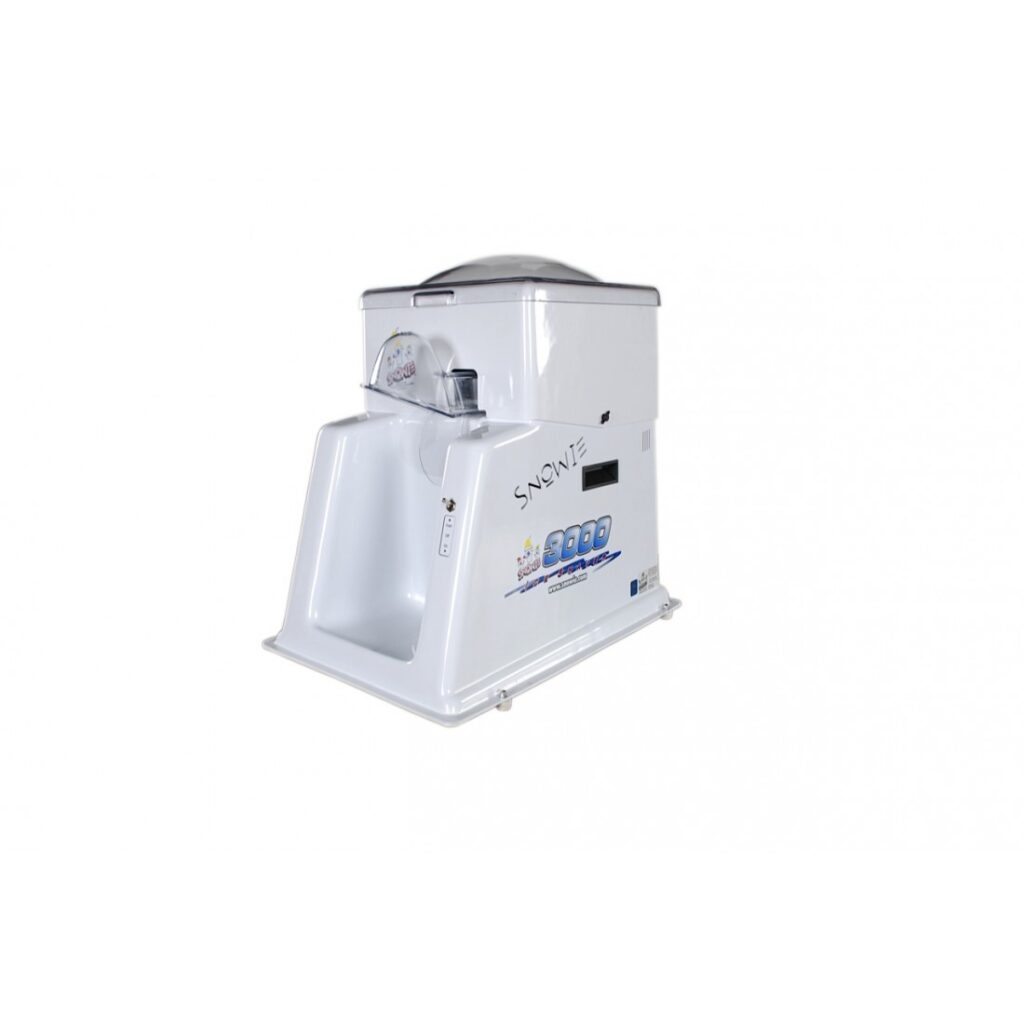
Next Chapter
Chapter 11: The $20,000 Shaved Ice Business — When Should You Go Bigger?
At $20,000, the conversation changes again.
We’ll look at when a commercial trailer, higher-cap
Absolutely. Chapter 15 should be the big-picture finale—the chapter that takes the reader from “I want to sell shaved ice” to “I can actually build a real brand.”
I’d make it more motivational and strategic than the earlier cost chapters.
Chapter 11: From One Cart to a Real Shaved Ice Brand
Starting with one shaved ice cart is exciting.
You buy your machine.
You choose your flavors.
You create your logo.
You make your first sale.
Then another.
Then another.
At some point, something changes.
You stop asking:
“Can I make money selling shaved ice?”
And start asking:
“How big can I make this?”
That’s where the real business begins.
Because the goal doesn’t have to be owning one cart and working it every weekend forever.
One cart can be the starting point for something much bigger.
Start With One Profitable Operation
Before you think about multiple carts, employees, trailers, or locations, make the first operation work.
You want to know:
- How much it costs to operate
- How much you make per event
- Which flavors sell
- Which locations perform best
- How many customers you can serve per hour
- How much inventory you need
- How much labor is required
- Which marketing channels produce customers
- How much profit the business generates
Once you know those numbers, you’ve created something extremely valuable:
A repeatable business model.
And repeatability is the foundation of scaling.
Your First Cart Should Become a Blueprint
Imagine your first cart is profitable.
Don’t simply think:
“Great, I have a profitable cart.”
Think:
“What exactly made this cart profitable?”
Write everything down.
Your:
Menu
Pricing
Equipment
Inventory system
Event checklist
Employee procedures
Marketing strategy
Cleaning process
Opening procedure
Closing procedure
Customer service standards
Now you have a blueprint.
That blueprint can eventually be used to build Cart #2.
Cart #2 Shouldn’t Feel Like Starting Over
If your first cart requires you to personally make every decision, scaling becomes difficult.
You don’t want Cart #2 to create twice the chaos.
You want it to create another revenue stream.
That’s why systems matter.
If your first cart has:
10 core flavors
3 sizes
2 employees
1 POS system
1 inventory checklist
1 opening checklist
then Cart #2 can follow the same system.
You’re not reinventing the business.
You’re duplicating a proven model.
Build a Brand Customers Recognize
There’s a major difference between:
“John’s Snow Cone Stand”
and
a recognizable shaved ice brand.
A brand has:
- Consistent colors
- Consistent logo
- Consistent signage
- Consistent menu
- Consistent product
- Consistent customer experience
When customers see your cart from across an event, they should recognize it immediately.
That’s when your brand starts becoming an asset.
Your Name Becomes More Valuable Over Time
When you first launch, your business name may mean nothing to anyone.
That’s normal.
But after hundreds or thousands of customers experience your product, the name begins to mean something.
It might eventually represent:
Fun
Summer
Family
Great customer service
Amazing flavors
Memorable events
That’s what you’re building.
Not just cups of ice.
Recognition.
Expand Into Catering
Catering can become one of the most important steps between a single cart and a larger shaved ice company.
Instead of waiting for customers to find you, you start actively selling your service.
You can target:
- Birthday parties
- Weddings
- Corporate events
- School functions
- Graduation parties
- Sports tournaments
- Community events
- Apartment communities
- Festivals
And eventually, your calendar could contain events weeks or months in advance.
That’s very different from hoping you’ll find a good location on Saturday afternoon.
Build a Booking Machine
Your website should eventually become more than an online brochure.
It should help generate business.
A potential customer should be able to:
See your packages
See your service area
View your menu
See photos
Request a quote
Choose a date
Contact you
The easier you make booking, the easier it becomes to turn website traffic into revenue.
Build Relationships With Event Organizers
Don’t only look for individual customers.
Build relationships with people who control events.
Think:
Event planners
Schools
Community organizations
Sports leagues
Apartment communities
Corporate event planners
Wedding planners
Festival organizers
One strong relationship can potentially send you multiple bookings.
Instead of finding 20 customers individually, you might build one relationship that produces 20 events.
That’s leverage.
Add More Locations Carefully
Once one location is profitable, you can experiment with another.
But don’t assume:
“If Location A makes money, Location B will too.”
Every location has different:
- Traffic
- Demographics
- Competition
- Event schedules
- Customer spending
- Regulations
- Operating costs
Test new locations before committing heavily.
Add a Trailer When the Business Needs One
A trailer can be a powerful growth tool.
It gives you:
- More storage
- More workspace
- More equipment capacity
- Greater visibility
- Strong branding opportunities
But don’t buy one simply because it looks impressive.
Buy it because the business model justifies it.
If your current cart is constantly running out of capacity, your catering bookings are increasing, and you’re turning away opportunities because you don’t have enough equipment or workspace, that’s a different story.
Now the trailer has a job.
Multiple Carts Create a New Problem
Once you have two or three carts, you’re no longer just a shaved ice vendor.
You’re becoming an operator.
Your problems change.
Now you have to think about:
Scheduling
Employee management
Inventory distribution
Equipment maintenance
Transportation
Cash controls
Quality control
Training
Customer complaints
Marketing across locations
That’s why scaling isn’t simply buying more equipment.
It’s building systems.
Hire People to Replace Tasks—Not Just Hours
Eventually, you may want employees to operate your carts.
But think beyond:
“I need someone to work Saturday.”
Think:
“What responsibility am I transferring to this person?”
Maybe they’re responsible for:
- Opening the cart
- Preparing equipment
- Serving customers
- Cleaning
- Closing
- Inventory reporting
When responsibilities are clearly defined, employees can become part of the system rather than simply extra hands.
Create a Training Manual
Your training manual doesn’t have to be 100 pages.
It can start with a few simple sections:
Product
How to make each size.
Syrup
How much to use.
Customer Service
How customers should be greeted and served.
Equipment
How to safely operate and clean the machine.
Payments
How to process transactions.
Closing
How to clean and secure everything.
Problems
What to do if equipment fails or supplies run out.
Now imagine giving that same manual to every new employee.
That’s how consistency begins.
Protect Your Reputation
As you grow, your reputation becomes more valuable.
One unhappy customer can post online.
One poorly handled event can damage a relationship.
One employee behaving badly can reflect on the entire brand.
So establish standards.
Your business should be known for:
Clean equipment
Friendly employees
Fast service
Good products
Reliable bookings
Professional communication
A strong reputation can become one of your most powerful marketing assets.
Track the Business by Location
If you eventually have multiple carts, don’t simply look at total company sales.
Look at each operation individually.
For example:
| Location | Sales | Expenses | Operating Profit |
|---|---|---|---|
| Cart A | $8,000 | $4,500 | $3,500 |
| Cart B | $5,000 | $4,200 | $800 |
| Cart C | $9,500 | $5,000 | $4,500 |
These are illustrative numbers.
But look at what this tells you.
Cart B is generating sales.
But it’s not nearly as profitable.
Maybe the location has:
- Higher fees
- Lower traffic
- More labor
- More transportation costs
Without tracking individual locations, you might assume everything is working.
Your numbers tell a different story.
Reinvest Instead of Constantly Starting From Zero
One of the most powerful things you can do with a profitable business is reinvest.
Suppose you generate profits from your first cart.
You could use some of those profits to:
Improve equipment
Buy inventory
Increase marketing
Build a second cart
Hire help
Develop catering
Now the original business is helping finance the next stage.
That’s how growth can become self-reinforcing.
Think Beyond Summer
A shaved ice business may be seasonal in many markets.
That doesn’t mean your business has to disappear during the off-season.
Use slower months to:
- Repair equipment
- Build your website
- Plan events
- Improve branding
- Create content
- Negotiate vendor relationships
- Research new locations
- Train employees
- Plan new products
- Book future events
The off-season can become your preparation season.
Create a Business Customers Can Book Year-Round
Even if you’re not operating every day, your booking calendar can stay active.
Someone planning a June birthday party may start searching months earlier.
Someone planning a summer corporate event may book even earlier.
That means your website and marketing shouldn’t disappear during the slower months.
Keep building the pipeline.
Eventually, You Can Build Multiple Revenue Channels
A mature shaved ice brand could potentially have:
Walk-Up Sales
Daily or event-based customers.
Catering
Private and corporate events.
Festivals
Large-volume public events.
Multiple Carts
Different locations simultaneously.
Trailers
Larger mobile operations.
Partnerships
Schools, businesses, venues, and organizations.
The exact combination depends on your market.
But the principle is powerful:
Don’t depend on one source of revenue forever.
The Business Can Become Bigger Than You
This is the ultimate goal of systems.
At first:
You make the shaved ice.
Then:
You train someone to make the shaved ice.
Then:
You train someone to manage the cart.
Then:
You manage multiple carts.
Eventually:
The business operates through systems rather than depending on you personally being present at every sale.
That’s when you’ve created something that resembles a true company rather than simply buying yourself another job.
Don’t Forget Why You Started
Scaling can become exciting.
Two carts.
Three carts.
A trailer.
Employees.
More events.
More sales.
More customers.
But don’t lose the reason people loved your business in the first place.
Maybe it was:
The amazing flavor.
The friendly service.
The colorful experience.
The family atmosphere.
The feeling of summer.
Protect that.
Growth should make the experience better—not turn it into something customers no longer recognize.
Your First Cart Is the Beginning
Maybe today you’re reading this with nothing but an idea.
Maybe you don’t own a machine.
Maybe you’ve never sold a single shaved ice.
Maybe you’re wondering whether this could actually become a business.
That’s okay.
Every business starts somewhere.
The first goal isn’t to own five carts.
It’s to make the first sale.
Then make the second.
Then figure out why those customers bought.
Then make the next event better.
Then build a system.
Then repeat.
Eventually, the thing that started as one small shaved ice cart can become:
A recognizable local brand.
A catering business.
A fleet of mobile carts.
A seasonal business generating serious revenue.
Or even something larger.
You don’t need to know exactly where the road ends.
You just need to build the next step correctly.
The Shaved Ice Business Formula
If there’s one formula I want you to remember from this entire guide, it’s this:
Start small.
↓
Know your numbers.
↓
Create an excellent product.
↓
Find profitable customers.
↓
Build repeat business.
↓
Create systems.
↓
Reinvest profits.
↓
Scale carefully.
↓
Build a brand.
That’s how you turn shaved ice from a summer idea into a real business.
Final Thought
The machine isn’t the business.
The cart isn’t the business.
The syrup isn’t the business.
You are building the business.
The equipment simply gives you the tools.
The customers give you the opportunity.
The numbers tell you what is working.
And your willingness to keep improving determines how far you can take it.
You don’t need to start with a giant trailer.
You don’t need 50 flavors.
You don’t need thousands of customers.
You need a good product, a smart plan, a willingness to learn, and the discipline to keep improving.
Start with one cart.
Make it work.
Then build from there.
One customer.
One event.
One sale.
One season.
Until one day you look back and realize that the little shaved ice business you started has become something much bigger than you originally imagined.
