

Everything You Need to Start, Operate, and Grow a Successful Snow Cone Business

“Give me six hours to chop down a tree and I will spend the first four sharpening the axe.” — Often attributed to Abraham Lincoln
There is something exciting about seeing a brand-new shaved ice trailer for the first time.
The machine gleams under the lights. Fresh bottles of brightly colored syrup line the shelves like a rainbow waiting to be poured. Stacks of cups are neatly organized. The menu is spotless. Everything looks ready for opening day.
From the outside, it appears simple.
Buy a machine.
Buy some syrup.
Find an event.
Start selling.
If only it were that easy.
Talk to almost any experienced shaved ice vendor, and they’ll tell you that some of the biggest lessons in this business have nothing to do with making shaved ice. They come from forgetting a simple tool, running out of a basic supply, or discovering—at exactly the wrong moment—that something important was left back in the garage.
Maybe it was an extension cord.
Maybe it was a spare blade.
Maybe it was the cash float needed for opening.
Perhaps it was something as small as a permanent marker to update a menu board.
On paper, those seem like tiny mistakes.
In reality, they can cost sales, create unnecessary stress, slow down your operation, and leave customers with an experience that falls short of what you wanted to deliver.
The truth is that successful shaved ice businesses are rarely built on dramatic moments of brilliance.
They’re built on preparation.
Preparation is what allows a vendor to stay calm while the line stretches twenty customers deep.
Preparation is what keeps the business running when equipment needs a quick adjustment.
Preparation is what gives customers confidence that they’re buying from professionals who know exactly what they’re doing.
Every successful event begins long before the first customer arrives.
It begins in your garage while loading the trailer.
It begins when you’re checking inventory.
It begins while inspecting equipment, testing your generator, organizing supplies, and asking yourself one simple question:
“If today becomes my busiest day of the year, am I ready?”
That question changes everything.
Because here’s something many first-time entrepreneurs don’t realize.
Customers don’t see your preparation.
They only experience the results of it.
They don’t notice that you packed extra syrup pumps.
They notice that their order arrived quickly.
They don’t see the backup extension cord hidden beneath the counter.
They simply notice that your stand never stopped serving.
They don’t know you packed extra gloves, napkins, towels, or spare parts.
They only remember that your business looked organized, professional, and effortless.
Behind every “effortless” business is an incredible amount of effort.
That’s one of the secrets successful vendors quietly understand.
Another common misconception is believing that equipment is simply a collection of tools.
It isn’t.
Every piece of equipment serves a purpose.
Your ice shaver determines consistency.
Your cooler protects one of your most valuable ingredients.
Your generator keeps your operation alive when shore power isn’t available.
Your point-of-sale system helps customers pay quickly and securely.
Even something as ordinary as a well-designed storage bin saves valuable seconds during busy rushes.
When hundreds of customers are waiting, those seconds matter.
One of the biggest differences between beginners and experienced operators is not how hard they work.
It’s how well they’re prepared.
Experienced vendors don’t rely on memory.
They rely on systems.
They use checklists.
They organize supplies in the same place every time.
They inspect equipment before every event.
They replace worn parts before they fail instead of after.
They understand that consistency is created through preparation—not luck.
That mindset is exactly why this guide exists.
This isn’t simply another equipment list copied from dozens of websites.
It’s a practical field guide built around the real needs of mobile shaved ice businesses.
Whether you’re setting up your very first cart, upgrading to a fully enclosed concession trailer, or preparing for your biggest festival of the season, you’ll find the tools, supplies, and systems that help businesses operate smoothly and professionally.
More importantly, you’ll learn why each item matters.
Some pieces of equipment protect your investment.
Others improve speed.
Some increase food safety.
Some improve customer experience.
Others exist for one reason only—to save the day when something unexpected happens.
By the time you finish this guide, you’ll have far more than a shopping list.
You’ll have a blueprint for building a business that operates with confidence.
You’ll know what equipment deserves your attention first.
Which purchases can wait until later.
Which tools experienced vendors never leave home without.
And which inexpensive items can prevent surprisingly expensive mistakes.
Our goal isn’t to convince you to buy everything.
It’s to help you buy the right things at the right time.
Because every dollar you invest should move your business forward.
As you work through this checklist, remember something important.
No successful shaved ice business started with the perfect setup.
Every great business started with the basics.
Then, season after season, the owners improved it.
They upgraded equipment.
They refined their systems.
They added new tools as their business grew.
They learned from experience.
You’ll do the same.
Don’t measure your beginning against someone else’s tenth season.
Focus on building a strong foundation.
Reliable equipment.
Thoughtful preparation.
Consistent systems.
Professional habits.
Those are the things that transform a simple shaved ice stand into a business customers trust and event organizers invite back year after year.
Let’s begin building that foundation together.
Because the difference between showing up and showing up prepared can be the difference between an ordinary season and an extraordinary one.
Chapter 1: The Equipment Mindset — Why Great Vendors Rarely Forget the Small Things
There is an old saying in business that success is what happens when preparation meets opportunity.
Few industries prove that statement more clearly than the shaved ice business.
Every season, thousands of vendors invest in new machines, colorful syrups, and attractive trailers, believing those purchases alone will determine their success. While quality equipment certainly matters, the truth is that equipment by itself has never built a thriving business.
Preparation has.
The difference becomes obvious the moment you work your first truly busy event.
When the temperature climbs into the nineties, children begin lining up with excited faces, parents are searching for a refreshing treat, and a line of customers stretches farther than you’ve ever imagined, something remarkable happens.
Your equipment stops being a collection of objects.
It becomes your team.
Every cooler, every scoop, every syrup pump, every extension cord, every spare blade, every storage bin, and every checklist suddenly has a job to do.
If each piece is ready, organized, and working together, the day flows almost effortlessly.
If even one critical item is missing, the entire operation can slow down.
That’s why experienced vendors don’t judge equipment by how impressive it looks.
They judge it by how reliably it performs when they’re under pressure.
The best equipment doesn’t simply help you make shaved ice.
It helps you protect your reputation.
Because customers rarely know what machine you’re using.
But they always remember how smoothly their experience went.
That mindset changes how you view every purchase.
Instead of asking, “Can I get by without this?” you’ll begin asking, “How does this help me serve customers better?”
That’s the question professional operators ask before every investment.
And as you’ll discover throughout this guide, it’s one of the smartest questions you can ask as you build a business designed to last.
Chapter 2: Your Shaved Ice Machine — The Heart of Your Business
If your trailer is the body of your shaved ice business, your shaved ice machine is undoubtedly its heart.
Every sale begins here.
Every customer experience starts here.
Every cup of fluffy, refreshing shaved ice that puts a smile on someone’s face exists because of one machine working exactly as it should.
That simple truth makes choosing a shaved ice machine one of the most important business decisions you’ll ever make.
It also explains why so many experienced vendors encourage beginners to think beyond the purchase price.
A shaved ice machine isn’t simply another expense.
It’s the piece of equipment your business will depend on every single day.
It determines how quickly you can serve customers, how consistent your product will be, how much maintenance you’ll perform, and how confidently you can handle a line of fifty people on a hot Saturday afternoon.
That’s a tremendous amount of responsibility for one machine.
Choosing wisely from the beginning can save you thousands of dollars—and countless headaches—in the years ahead.
Commercial vs. Home Shaved Ice Machines
One of the first questions every new entrepreneur asks is whether they should begin with a less expensive home machine or invest in commercial equipment immediately.
The answer depends on your goals.
If you’re simply making shaved ice for family gatherings a few weekends each summer, a residential machine may be perfectly adequate.
But if you’re planning to charge customers, attend festivals, cater birthday parties, work school events, or build a real business, commercial equipment quickly becomes the better investment.
Commercial machines are designed to operate for long periods without overheating.
They produce more consistent ice texture.
They handle larger volumes.
They’re built with stronger components, better motors, and heavier-duty construction that can withstand years of demanding use.
In business, reliability often pays for itself.
Customers don’t care whether your machine is residential or commercial.
They care whether they’re standing in line waiting while it struggles to keep up.
Understanding Ice Types
Not every shaved ice machine uses the same kind of ice.
Some machines are designed for standard ice cubes.
Others require block ice.
Still others accept specially molded cylinders.
Each option has advantages.
Cube ice machines are convenient because ice is widely available at grocery stores, gas stations, and commercial ice suppliers.
They allow many new vendors to get started quickly without additional equipment.
Block ice machines often produce an exceptionally light, fluffy texture that closely resembles authentic Hawaiian shaved ice.
However, they may require additional planning because block ice isn’t always readily available in every community.
Understanding what type of ice your machine requires is just as important as understanding the machine itself.
Choosing a machine without considering your local ice supply can create unnecessary challenges before your first event even begins.
Capacity Matters More Than Most Beginners Realize
One of the biggest mistakes first-time vendors make is buying equipment based on an average day instead of their busiest day.
Imagine your business receives a last-minute invitation to a popular community festival.
Hundreds of families arrive.
Temperatures soar.
Your line grows steadily longer.
Can your machine keep up?
A machine capable of serving thirty customers per hour may perform beautifully during birthday parties.
That same machine could become overwhelmed at a county fair.
Think carefully about where you hope your business will be—not just where it starts.
Buying equipment with room to grow often costs less than replacing undersized equipment after only one successful season.
Speed Is More Than Convenience
Every second matters during a rush.
When customers wait too long, excitement slowly turns into impatience.
Children become restless.
Parents reconsider whether they want to remain in line.
Some quietly walk away.
Serving customers efficiently doesn’t simply improve operations.
It protects revenue.
A machine capable of producing consistent shaved ice quickly allows your team to focus on customer service rather than waiting for equipment to catch up.
That’s why speed should never be viewed as a luxury.
It’s part of delivering a great customer experience.
Consistency Builds Trust
Imagine visiting your favorite coffee shop.
One day the coffee is outstanding.
The next visit it’s weak.
The third visit it’s bitter.
Eventually you begin wondering what you’ll receive each time.
Consistency creates confidence.
The same principle applies to shaved ice.
Customers expect soft, fluffy ice every time they visit.
A quality machine helps you deliver that consistency whether you’re serving your first customer of the morning or your two-hundredth customer of the afternoon.
Your reputation quietly depends on that consistency.
Stainless Steel vs. Plastic Construction
Many entry-level machines rely heavily on plastic components.
Professional equipment often incorporates stainless steel construction instead.
While plastic may reduce the initial purchase price, stainless steel generally provides greater durability, easier cleaning, improved sanitation, and a more professional appearance.
Remember that customers see your equipment.
Clean, well-maintained commercial equipment communicates quality before a single cup is served.
Ease of Cleaning
Cleaning isn’t the most exciting part of operating a shaved ice business.
It’s also one of the most important.
Machines with accessible components are easier to sanitize thoroughly after every event.
That means less time scrubbing and more confidence knowing your equipment is ready for the next customer.
Good sanitation protects your customers.
It also protects your reputation.
Noise Levels
This is something many beginners never consider.
Some machines operate surprisingly quietly.
Others can dominate your workspace with constant noise.
While shaved ice machines will never be silent, excessive noise can make communication between employees more difficult and slightly reduce the overall customer experience.
If possible, hearing a machine operate before purchasing can be surprisingly valuable.
Replacement Parts Availability
Every machine eventually requires maintenance.
Blades become dull.
Switches wear out.
Motors require servicing.
Belts may eventually need replacement.
Before investing in any machine, ask yourself an important question.
“If something breaks in the middle of summer, how quickly can I obtain replacement parts?”
Equipment supported by readily available parts often proves far more valuable over the long term than equipment that becomes impossible to repair.
Accessories Every Vendor Should Own
Buying the machine is only the beginning.
Professional vendors keep several essential accessories close at hand because they understand that preparation prevents downtime.
Your shaved ice machine kit should include:
- Spare shaving blades
- Blade adjustment tools
- Food-safe lubricant (if recommended by the manufacturer)
- Cleaning brushes
- Soft microfiber towels
- Sanitizing solution
- Small tool kit
- Spare fasteners and hardware
- Operator’s manual
- Maintenance logbook
Individually, these items aren’t expensive.
Collectively, they can prevent a small issue from ending an entire day of sales.
Preventative Maintenance Is Far Cheaper Than Emergency Repairs
Many people wait until something breaks before performing maintenance.
Experienced vendors think differently.
They inspect equipment before problems develop.
They sharpen or replace blades before performance declines.
They tighten loose hardware.
They clean internal components.
They listen for unusual sounds.
They notice small changes before they become expensive repairs.
Preventative maintenance isn’t simply about protecting a machine.
It’s about protecting your income.
Every hour your machine is unavailable is an hour your business cannot serve customers.
A few minutes of routine care can prevent days—or even weeks—of unexpected downtime.
Think Beyond Today’s Purchase
When shopping for a shaved ice machine, it’s easy to focus on price.
But price tells only part of the story.
A dependable machine should still be serving customers years from now.
It should help your business grow from birthday parties to festivals, from local markets to county fairs, from a small side hustle to a thriving seasonal business.
Viewed over the life of your business, the right machine becomes far more than a purchase.
It becomes one of your most valuable business partners.
Choose it with the same care you would choose someone joining your team.
Because every cup you sell begins with that decision.
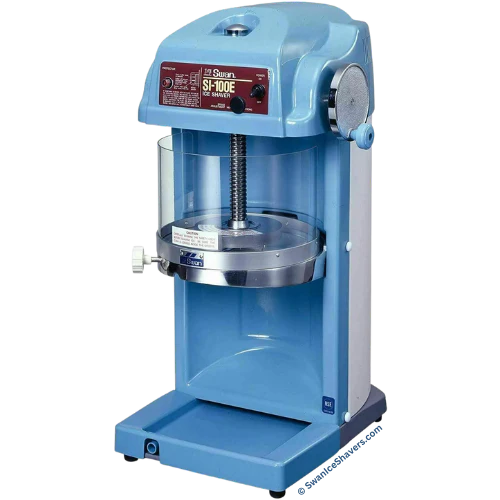
Quick Equipment Checklist ✓
Before your first event, confirm you have:
☐ Commercial shaved ice machine (or one suited to your business goals)
☐ Extra shaving blades
☐ Blade adjustment tools
☐ Cleaning brushes
☐ Food-safe sanitizer
☐ Soft cleaning towels
☐ Manufacturer’s manual
☐ Basic tool kit
☐ Maintenance log
☐ Spare hardware
☐ Extension cord (if required)
☐ Machine cover for storage and transport
Coming Up Next
A shaved ice machine is useless without one essential ingredient: ice.
Many beginners assume keeping ice cold is simple—until they lose hundreds of pounds of it on a hot summer day.
In the next chapter, we’ll build the complete Ice Storage and Handling Checklist, covering coolers, insulated storage, ice scoops, transportation, sanitation, and the professional systems that keep ice frozen, clean, and ready for even the busiest events.
Chapter 3: Ice Storage & Handling — Protecting the One Ingredient Your Business Can’t Live Without
Every shaved ice business is built on one ingredient.
Not syrup.
Not cups.
Not toppings.
Ice.
Without it, your business simply doesn’t exist.
It doesn’t matter how beautiful your trailer looks, how many flavors you offer, or how busy the festival is. The moment you run out of clean, usable ice—or the moment your ice begins melting faster than you planned—your business starts losing money.
That may sound dramatic, but it’s true.
Every cup of shaved ice you sell begins with a handful of frozen water.
Protecting that ingredient should become one of your highest priorities.
Ironically, many new vendors spend weeks researching shaved ice machines but only a few minutes thinking about how they’ll store, transport, and manage the very thing that machine depends on.
Experienced vendors know better.
They understand that good ice management isn’t just about keeping things cold. It’s about protecting product quality, maintaining food safety, reducing waste, and ensuring they can confidently serve customers from the first order of the morning until the last customer leaves the event.
Choosing the Right Cooler
Not every cooler is built for commercial use.
A cooler that’s perfect for a family camping trip may struggle during an eight-hour festival in the middle of July.
When evaluating coolers, think beyond size.
Insulation quality matters.
Lid design matters.
Drainage matters.
Durability matters.
The better your cooler retains ice, the less frequently you’ll need to replenish it throughout the day.
That saves both money and stress.
A dependable cooler isn’t simply a storage container.
It’s part of your profit margin.
One Large Cooler or Several Smaller Ones?
Many beginners automatically purchase the largest cooler they can find.
While that can work well, experienced vendors often prefer multiple coolers instead.
Why?
Because every time you open a cooler, warm air enters and cold air escapes.
If all of your ice is stored in one container, you’re repeatedly exposing your entire supply to outside temperatures.
Using multiple coolers allows you to keep reserve ice sealed until it’s actually needed.
That simple strategy often helps ice last significantly longer during long events.
It also creates a backup if one cooler becomes damaged or contaminated.
Ice Is Food—Treat It That Way
This is one of the easiest things for new vendors to overlook.
Ice is considered food.
That means it deserves the same care and attention as any ingredient served to customers.
Never scoop ice with the same cup you’re serving customers.
Never reach into ice bins with bare hands.
Never place bags of ice directly onto dirty surfaces before opening them.
Keep ice protected from dust, insects, and unnecessary handling.
Customers may never notice these habits.
Health inspectors certainly will.
More importantly, these practices protect the people you’re serving.
Professionalism often reveals itself through the habits nobody sees.
Always Use a Dedicated Ice Scoop
A quality ice scoop is one of the least expensive pieces of equipment you’ll buy.
It is also one of the most important.
Choose a food-grade scoop that is comfortable to hold and large enough to move ice efficiently without being difficult to control.
Just as important as owning the scoop is storing it properly.
Never leave it buried inside the ice.
Instead, keep it in a clean, designated holder where it remains sanitary and easy to reach.
This small habit demonstrates attention to food safety and keeps your workspace organized.
Plan for More Ice Than You Think You’ll Need
Ask experienced shaved ice vendors about one of their biggest beginner mistakes, and many will give the same answer.
“I didn’t bring enough ice.”
It happens surprisingly often.
The weather turns hotter than expected.
Attendance exceeds expectations.
Customers keep arriving.
Suddenly, the carefully calculated supply of ice begins disappearing much faster than anticipated.
Running out of syrup is frustrating.
Running out of ice ends the day.
Whenever possible, plan for success.
Bring enough ice for your expected sales—and then build in a reasonable safety margin.
If you’re deciding between “just enough” and “a little extra,” experienced operators almost always choose the latter.
Organizing Your Ice Workflow
Efficient businesses reduce unnecessary movement.
Think about the path your employees take every time they prepare an order.
Where is the ice stored?
How far must they walk?
Can they access it without crossing in front of another team member?
Can the next order begin while the previous one is being finished?
Small improvements in layout become significant advantages when serving hundreds of customers.
Good workflow isn’t accidental.
It’s designed.
Transporting Ice Safely
The journey from your supplier to your event is just as important as storage during the event itself.
Keep coolers closed while traveling.
Avoid unnecessary stops with coolers sitting in direct sunlight.
Whenever possible, load ice shortly before departing rather than several hours in advance.
If transporting bagged ice, avoid stacking heavy equipment on top of the bags, which can cause tearing and contamination.
A little planning before leaving home can preserve hours of cooling performance later in the day.
Drainage Matters
Many coolers include drain plugs, but few beginners think about when—or whether—to use them.
Some vendors prefer draining melted water periodically.
Others leave a small amount inside because cold water can help maintain low temperatures around the remaining ice.
The right approach depends on your cooler design and how the ice is being used.
The important point is to understand how your equipment performs rather than relying on assumptions.
Learning these small details about your setup helps you become more efficient over time.
Don’t Forget the Backup Plan
Even the best preparation cannot control everything.
A cooler latch can break.
An unexpected heat wave can increase ice consumption.
A supplier may be delayed.
Professional vendors prepare for these possibilities before they happen.
Know where additional ice can be purchased near your event.
Save supplier phone numbers.
Keep an emergency cooler available if space allows.
Preparation doesn’t eliminate problems.
It simply prevents small problems from becoming business-ending ones.
Clean Coolers Matter More Than You Think
At the end of a long event, it’s tempting to empty the cooler and deal with it later.
Resist that temptation.
Clean and sanitize coolers after every use.
Allow them to dry completely before storing them.
Inspect seals, hinges, handles, and drain plugs regularly.
A cooler that is clean, odor-free, and well maintained performs better and lasts much longer than one that is neglected.
Like every other piece of equipment in your business, it deserves routine care.
Think Like a Professional
Customers never compliment a vendor by saying,
“Your cooler was excellent.”
But they absolutely notice the results of proper ice management.
Fast service.
Clean workspaces.
Consistent product quality.
No unexpected delays.
Those experiences all begin with one simple decision:
Treat your ice like the valuable business asset it is.
Because every cup you sell starts long before the syrup is poured.
It starts with how well you protect the ingredient that makes your business possible.
Ice Storage & Handling Checklist ✓
Before every event, make sure you have:
☐ Commercial insulated cooler(s)
☐ Backup cooler
☐ Food-grade ice scoop
☐ Scoop holder
☐ Food-safe storage bins
☐ Ice bags
☐ Cooler drain plug checked
☐ Cooler seals inspected
☐ Sanitizing wipes
☐ Clean towels
☐ Ice supplier contact information
☐ Emergency ice purchase location identified
☐ Cooler cleaned and sanitized
☐ Cooler fully loaded before departure
☐ Extra ice planned for busy weather
Coming Up Next
You can have the world’s best shaved ice machine and perfectly stored ice, but without syrups, serving supplies, and an organized preparation station, your operation quickly slows down.
In the next chapter, we’ll build one of the most practical sections of this guide: The Complete Syrup & Flavor Station Checklist, where we’ll cover bottles, pumps, flavor organization, labeling systems, inventory management, and the professional workflow that allows experienced vendors to serve customers quickly—even when the line seems endless.
Chapter 4: Building the Perfect Syrup & Flavor Station — Where Speed Meets Consistency
Walk behind the counter of almost any successful shaved ice business, and you’ll notice something interesting.
It isn’t chaos.
It isn’t bottles scattered across every available surface.
It isn’t employees searching for the right flavor while customers wait.
Instead, everything has a place.
The syrup station feels organized.
The bottles are clearly labeled.
The most popular flavors are always within easy reach.
Employees move confidently because they already know where everything belongs.
To a customer, it looks effortless.
To an experienced vendor, it’s the result of thoughtful planning.
One of the easiest ways to slow down a busy operation is by creating an inefficient flavor station.
Every second spent searching for a syrup bottle, replacing a clogged pump, or asking another employee where something belongs is time that could have been spent serving the next customer.
When the line is twenty people long, those seconds begin adding up quickly.
That’s why successful vendors don’t simply buy syrup.
They build systems around it.
Start With Quality Syrup Bottles
Not all syrup bottles are created equally.
Some are designed for occasional home use.
Others are built to withstand the demands of busy festivals where they’ll be handled hundreds of times in a single day.
Choose food-grade bottles that are durable, easy to squeeze or pump, simple to clean, and comfortable to handle.
Consistency matters.
Using the same style and size of bottle throughout your operation creates a cleaner appearance and makes training employees much easier.
Uniformity reduces hesitation.
When every bottle feels familiar, your team works faster without even thinking about it.
Syrup Pumps: Small Investment, Big Difference
Many beginners underestimate the importance of syrup pumps.
At first glance, pouring syrup directly from a bottle seems perfectly acceptable.
After all, it saves money.
In reality, pumps offer several advantages that quickly justify their cost.
They help create consistent portions.
They reduce waste.
They minimize sticky spills.
They speed up service.
Most importantly, they help ensure that every customer receives the same great product every time they visit.
Consistency isn’t just good for customer satisfaction.
It’s good for profitability.
When portion sizes remain consistent, inventory becomes much easier to manage and unexpected costs become easier to control.
Label Everything Clearly
Imagine you’re training a new employee during a busy community festival.
A customer orders Blue Raspberry, Tiger’s Blood, and Wedding Cake.
If bottles aren’t clearly labeled, valuable time is wasted checking each one.
Now imagine every bottle has a large, waterproof label that’s easy to read from multiple angles.
The difference may seem small.
Over the course of hundreds of orders, it becomes enormous.
Professional organization creates professional speed.
Organize Flavors by Popularity
One of the smartest layout strategies experienced vendors use is organizing flavors based on demand rather than alphabetical order.
Your top-selling flavors should always be the easiest to reach.
If Blue Raspberry, Cherry, Tiger’s Blood, Cotton Candy, and Watermelon account for most of your sales, place them directly in front of the person preparing orders.
Less frequently ordered flavors can be positioned slightly farther away without affecting efficiency.
This simple adjustment reduces unnecessary movement throughout the day and helps employees maintain a smooth rhythm during busy periods.
Create Signature Flavor Sections
Customers often feel overwhelmed when presented with dozens of choices.
Help them decide.
Instead of displaying only individual flavors, create a section featuring customer favorites or signature combinations.
For example:
- Tropical Paradise
- Island Sunset
- Blue Lagoon
- Summer Splash
- Carnival Rainbow
These names create curiosity.
They also make ordering faster because customers can simply ask for a featured combination instead of trying to invent one themselves.
Memorable names also give customers something to recommend later.
“You have to try the Island Sunset!”
That’s much easier to remember than a list of three separate syrups.
Keep Backup Bottles Ready
Running out of a popular syrup during a rush can interrupt your entire workflow.
Professional vendors prepare for this before the first customer arrives.
Whenever possible, keep backup bottles already filled and ready to replace empty ones.
Instead of stopping to refill bottles during peak hours, your team can simply swap them out and continue serving customers.
The empty bottles can be cleaned and refilled once the rush has slowed.
Small systems like this dramatically reduce downtime.
Prevent Sticky Workspaces
Every shaved ice business deals with syrup spills.
The difference is how quickly they’re handled.
A clean syrup station creates a better impression, reduces slipping hazards, prevents insects, and makes employees happier to work.
Keep cleaning cloths within easy reach.
Wipe bottles regularly throughout the day.
Avoid allowing syrup to build up around pumps and work surfaces.
A clean station communicates professionalism long before a customer takes their first bite.
Inventory Is More Than Counting Bottles
Many beginners simply check whether they have syrup.
Experienced vendors ask different questions.
Which flavors are selling fastest?
Which bottles need replacing before the next event?
Which seasonal flavors should be reordered?
Which flavors rarely sell?
Inventory isn’t just about knowing what you have.
It’s about understanding what your customers actually buy.
Those insights help you make smarter purchasing decisions over time.
Rotate Your Stock
Syrups should never be forgotten on the back shelf.
Adopt a simple first-in, first-out rotation system.
Older inventory should be used before newly delivered inventory whenever possible.
This helps maintain freshness, reduces waste, and ensures consistent product quality throughout the season.
Good inventory habits protect both your reputation and your profits.
Don’t Forget Seasonal Favorites
One of the joys of running a shaved ice business is creating excitement throughout the year.
Limited-time flavors can generate curiosity, encourage repeat visits, and give loyal customers something new to look forward to.
Summer berry blends.
Tropical vacation flavors.
Fall-inspired creations.
Holiday specialties.
These additions don’t require a complete menu overhaul.
A few carefully chosen seasonal offerings can make your business feel fresh every time customers visit.
Design Your Station for Teamwork
As your business grows, more than one person may be working behind the counter.
A syrup station should allow employees to move naturally without constantly crossing paths.
Think about where bottles are placed.
Can two employees prepare different orders at the same time?
Can someone restock supplies without interrupting another person’s workflow?
Small layout improvements often produce surprisingly large increases in efficiency.
The best workstations don’t happen by accident.
They’re intentionally designed.
Think Like a Customer
Customers don’t see your syrup station the way you do.
They aren’t evaluating bottle brands or pump mechanisms.
They’re noticing whether your business feels organized.
Whether orders move quickly.
Whether employees seem confident.
Whether the experience feels smooth.
Everything behind the counter eventually becomes part of the customer experience in front of the counter.
That’s why organization isn’t just about convenience.
It’s becomes part of your brand.
Every neatly labeled bottle.
Every clean countertop.
Every efficiently prepared order quietly tells customers something important:
“These people know what they’re doing.”
And confidence is contagious.
Customers naturally trust businesses that appear prepared.
Syrup & Flavor Station Checklist ✓
Before every event, confirm you have:
☐ Food-grade syrup bottles
☐ Portion-control syrup pumps
☐ Waterproof flavor labels
☐ Backup filled syrup bottles
☐ Funnels for easy refilling
☐ Measuring containers
☐ Bottle cleaning brushes
☐ Food-safe sanitizer
☐ Cleaning cloths
☐ Flavor display menu
☐ Inventory tracking sheet
☐ Seasonal specialty syrups
☐ Storage containers for extra syrup
☐ Waste container for spills
☐ Organized workstation layout
Coming Up Next
A customer’s first impression isn’t your shaved ice.
It’s the cup you hand them.
Serving supplies may seem like small details, but they’re some of the most visible parts of your business.
In the next chapter, we’ll build the Complete Serving Supplies Checklist, covering cups, lids, spoon straws, napkins, carriers, presentation, and the small touches that transform an ordinary purchase into a memorable customer experience.
Chapter 5: Serving Supplies — The Small Details Customers Remember
Ask someone what they remember about the best shaved ice they’ve ever had, and they’ll probably mention the flavor.
Maybe they’ll remember how soft the ice was.
Maybe they’ll remember the bright colors.
Maybe they’ll remember eating it on a hot summer afternoon with family and friends.
What they probably won’t tell you is what kind of cup it came in.
Yet strangely enough, the cup, lid, spoon straw, and every other serving supply quietly shape the entire experience.
They’re the first things your customer sees.
They’re the first things they touch.
They’re what they carry around the fairgrounds, the ballpark, the carnival, or the community festival.
In many cases, they’re also what appears in photos shared on social media.
That means your serving supplies aren’t simply disposable items.
They’re part of your product.
They’re part of your presentation.
And they’re part of your brand.
Professional vendors understand this.
They don’t buy the cheapest supplies they can find simply because they’re inexpensive.
They choose products that help customers enjoy the experience while allowing their team to work efficiently.
The right serving supplies protect your product, improve speed, reduce waste, and leave customers with a positive impression long after the last bite has melted.
Choosing the Right Cups
The cup may seem like one of the simplest purchases you’ll make.
In reality, it’s one of the most important.
A cup that’s too small limits portion size and perceived value.
A cup that’s too large encourages over-serving, reducing profit margins and creating unnecessary waste.
Finding the right balance is essential.
Most successful vendors carry several cup sizes to meet different customer needs.
A smaller size may appeal to young children or customers looking for a quick treat.
Medium sizes often become the best sellers because they provide excellent value without being overwhelming.
Larger cups appeal to customers who want premium combinations, additional toppings, or a dessert that can be shared.
Offering multiple sizes also creates natural upselling opportunities.
Many customers willingly choose a larger option when the value difference is clearly communicated.
Strong Cups Prevent Embarrassing Moments
Imagine handing a customer a beautiful shaved ice on a warm afternoon.
A few minutes later, the cup begins to soften, leak, or collapse.
Instead of remembering how delicious the product tasted, the customer remembers the sticky mess running down their hands.
Quality serving cups reduce that risk.
Choose cups designed to handle cold, wet products without losing their shape.
Reliable cups protect both your product and your reputation.
Lids Do More Than Prevent Spills
Some vendors view lids as optional.
Others consider them essential.
The right lid allows customers to carry their shaved ice more comfortably while walking around festivals or sporting events.
It also reduces spills, protects toppings, and creates a cleaner presentation.
Dome lids can be especially useful when serving premium creations with whipped cream, candy, fruit, or other toppings that extend above the rim of the cup.
Flat lids may be appropriate for simpler menu items.
Choosing the right lid depends on your menu and your customers’ needs.
Spoon Straws: Small Tool, Big Impact
Ask almost any shaved ice customer what they expect to receive with their order, and the answer is simple.
A spoon straw.
This small item allows customers to enjoy the fluffy ice first before sipping the sweet syrup that collects near the bottom of the cup.
Without it, the experience feels incomplete.
Always keep plenty available.
Running out of spoon straws during an event may seem like a minor inconvenience, but it can quickly become a major customer service issue.
Never underestimate the importance of the smallest tools.
Napkins Are Customer Service
Shaved ice is meant to be fun.
It’s also meant to be a little messy.
Melting ice.
Sticky syrup.
Colorful fingers.
These are all part of the experience.
Providing generous, easily accessible napkins tells customers you’ve anticipated their needs.
It’s a simple gesture that communicates professionalism and care.
Many successful vendors place additional napkins in clearly visible self-service locations so customers can grab extras without waiting.
Cup Organization Saves Time
Busy vendors don’t search for cups.
They reach for them instinctively.
Store cups in organized dispensers or clearly separated stacks.
Arrange them in the order they’re used most frequently.
Keep backup inventory nearby but out of the immediate workspace to reduce clutter.
An organized serving station allows employees to work naturally without unnecessary movement.
Efficiency isn’t about rushing.
It’s about eliminating wasted motion.
Protect Supplies From the Elements
Serving supplies spend much of their life outdoors.
That means they’re exposed to wind, dust, moisture, and sunlight.
Store cups and lids in clean, covered containers whenever possible.
Protect unopened inventory until it’s needed.
Maintaining clean supplies isn’t just good practice.
It’s an important part of food safety.
Customers notice clean businesses.
Health inspectors do too.
Buy for Consistency, Not Just Price
It can be tempting to purchase different brands whenever they’re on sale.
While saving money is important, constantly changing the size, shape, or quality of your serving supplies can create inconsistencies in portion sizes and customer expectations.
Consistency makes training easier.
Consistency makes ordering easier.
Consistency strengthens your brand.
When customers receive the same quality experience every time they visit, trust begins to grow.
Consider Your Brand
Even if you’re just starting out, think about how your serving supplies represent your business.
Simple branded stickers.
Custom cups.
Printed napkins.
A well-designed sleeve.
These additions aren’t necessary on day one, but they can become valuable marketing tools as your business grows.
Every customer walking through a crowded event with your logo in their hand becomes a small advertisement for your business.
Branding doesn’t always need to be expensive.
It simply needs to be intentional.
Don’t Forget the Extras
Experienced vendors know that serving supplies extend beyond cups and lids.
Drink carriers can make it easier for families to carry multiple orders.
Small trays can simplify large catering orders.
Condiment containers help organize toppings.
Display baskets keep supplies within easy reach while maintaining a clean appearance.
These details may not attract attention individually.
Together, they create a business that feels organized and prepared.
Great Presentation Creates Lasting Memories
People don’t visit a shaved ice stand simply because they’re thirsty.
They’re buying an experience.
They’re escaping the heat.
They’re treating their children.
They’re celebrating a summer afternoon.
They’re making memories.
Every colorful cup you hand across the counter becomes part of that memory.
Serve it with pride.
Serve it with consistency.
Serve it in a way that reflects the care you’ve invested in every other part of your business.
Because customers may forget exactly how many ounces were in the cup.
But they’ll always remember how your business made them feel.
Serving Supplies Checklist ✓
Before every event, make sure you have:
☐ Small serving cups
☐ Medium serving cups
☐ Large serving cups
☐ Dome lids
☐ Flat lids (if used)
☐ Spoon straws
☐ Napkins
☐ Cup dispensers or organizers
☐ Drink carriers
☐ Condiment cups (for toppings)
☐ Serving trays (for catering or large orders)
☐ Branded stickers or labels (optional)
☐ Backup serving supplies
☐ Covered storage containers
☐ Waste bin for packaging
Coming Up Next
You can have the best equipment, the fluffiest ice, and the perfect serving supplies—but if your payment process is slow or unreliable, you’ll lose sales.
In the next chapter, we’ll build the Point of Sale (POS), Cash Handling & Technology Checklist, covering card readers, cash drawers, mobile payments, receipt systems, internet connectivity, backup power, and the technology that keeps modern shaved ice businesses running smoothly.
Chapter 6: Point of Sale (POS), Cash Handling & Technology — The Systems That Keep Sales Moving
There was a time when running a shaved ice business required little more than a cash box and a pocket full of change.
Those days aren’t gone completely, but customer expectations have changed.
Today, many people leave home with their phones instead of their wallets. They tap a card, use a digital wallet, or pay with a smartwatch without thinking twice. If your business can’t accept the way customers prefer to pay, you may lose a sale before you’ve even started making their order.
That’s why your point-of-sale system deserves just as much attention as your shaved ice machine.
After all, every successful transaction ends the same way.
The customer pays.
The faster, easier, and more reliable that experience is, the happier your customers will be—and the more smoothly your business will operate.
Technology isn’t replacing good customer service.
It’s supporting it.
The goal isn’t to fill your trailer with expensive gadgets.
The goal is to remove friction from the buying experience so your customers spend less time waiting and more time enjoying their shaved ice.
Make Paying Easy
Think about your own shopping habits.
If one business accepts your preferred payment method and another doesn’t, which one feels easier to buy from?
Your customers think the same way.
Offering multiple payment options—including cash, major credit cards, debit cards, and mobile payment methods—makes your business more convenient and accessible.
Convenience often leads to more completed sales.
It also encourages impulse purchases, especially at festivals and community events where customers are making quick decisions.
Removing payment barriers is one of the simplest ways to improve the customer experience.
Choose a POS System That Grows With You
Many beginners start with a simple mobile card reader connected to a smartphone.
For small events, that may be all you need.
As your business grows, however, you’ll likely appreciate the benefits of a dedicated point-of-sale system.
A good POS system does much more than process payments.
It can track sales, monitor inventory, organize menu items, record daily performance, and generate reports that help you make smarter business decisions.
Instead of wondering which flavors sold best, you’ll know.
Instead of guessing your busiest hours, you’ll have the data.
The better you understand your business, the better you can improve it.
Reliable Internet Matters
Many payment systems rely on an internet connection.
Before every event, consider how you’ll stay connected.
Some venues provide dependable Wi-Fi.
Many do not.
Experienced vendors often use a dedicated mobile hotspot or ensure their cellular service is strong enough to process transactions throughout the day.
Whenever possible, learn whether your payment system offers an offline mode that allows transactions to continue temporarily if connectivity is interrupted.
A few minutes of preparation can prevent a long line of frustrated customers.
Never Forget the Cash Drawer
Even in a world of digital payments, cash remains important.
Some customers prefer it.
Some events attract visitors who bring spending money specifically in cash.
Others simply appreciate having the option.
Your cash drawer should be organized before the first customer arrives.
Begin the day with an appropriate amount of change in small bills and coins.
Avoid carrying unnecessary amounts of cash, but make sure you’re prepared to provide change quickly and accurately.
Nothing slows a line faster than searching for coins or asking neighboring vendors for smaller bills.
Professional preparation creates professional service.
Keep Your Money Secure
Cash management isn’t only about convenience.
It’s also about security.
Use a lockable cash drawer or secure cash box.
Avoid leaving large amounts of money visible.
Periodically remove excess cash throughout the day and store it safely according to your business procedures.
Develop consistent habits for counting cash before opening and after closing.
Accurate records protect both your business and your peace of mind.
Tablets and Order Screens
As your operation grows, a tablet can become one of the most valuable tools in your trailer.
A well-organized menu on a tablet allows employees to enter orders quickly and accurately.
Some systems display customer orders clearly for the person preparing shaved ice, reducing mistakes during busy rushes.
Technology should simplify communication, not complicate it.
Choose systems that are intuitive enough for new employees to learn quickly.
The easier they are to use, the more confident your team will become.
Keep Every Device Charged
One overlooked reality of operating a mobile business is that batteries don’t care how busy you are.
A dead tablet.
A phone with one percent battery.
A disconnected card reader.
Each one has the potential to interrupt sales.
Charge every device before leaving for an event.
Carry charging cables for every piece of equipment.
Bring portable power banks for emergencies.
Whenever possible, designate one location inside your trailer where charging equipment is stored.
Knowing exactly where everything belongs saves valuable time.
Receipt Options
Not every customer needs a receipt, but every customer should have the option.
Digital receipts reduce paper waste and are convenient for many people.
Printed receipts may still be useful for catering clients, corporate events, or customers requesting proof of purchase.
Choose the approach that best fits your business while remaining flexible enough to meet customer needs.
Organize Your Menu
Technology is only as helpful as the information it displays.
Keep your menu clear and easy to navigate.
Group similar items together.
Highlight your best-selling flavors.
Make pricing easy to understand.
The fewer questions customers have to ask, the faster the ordering process becomes.
A well-designed menu doesn’t simply inform customers.
It guides them.
Track Your Numbers
Many entrepreneurs focus only on how much money they made during an event.
Professional business owners ask deeper questions.
Which flavors sold the most?
What time was the busiest?
How many premium toppings were purchased?
Which event produced the highest average sale?
These numbers tell the story of your business.
Over time, they help you improve pricing, inventory planning, staffing, and marketing.
The businesses that grow consistently are usually the businesses that measure consistently.
Technology Should Support Hospitality
It’s easy to become so focused on screens that you forget the person standing in front of you.
Never let technology replace genuine customer service.
Smile.
Make eye contact.
Thank customers for their purchase.
Ask children which color syrup they’re excited about.
Celebrate birthdays.
Compliment someone’s flavor combination.
These small moments create memories that no piece of software ever could.
Technology should make your business more efficient.
Your personality is what makes it memorable.
Prepare for the Unexpected
No technology is perfect.
Card readers fail.
Internet signals disappear.
Power cords come loose.
Printers run out of paper.
Professional vendors don’t panic when these things happen.
They prepare.
Carry spare charging cables.
Keep backup batteries.
Know how to restart your equipment.
Have a manual receipt book available if needed.
Accepting challenges calmly is one of the characteristics customers admire most.
Preparation gives you that confidence.
Your Checkout Experience Is Part of Your Brand
The final interaction a customer has with your business often happens at the payment counter.
Make it count.
A smooth checkout leaves people with a lasting impression of professionalism.
It encourages repeat visits.
It makes recommending your business easier.
And it reinforces the idea that every part of your operation has been thoughtfully designed.
Because at the end of the day, customers don’t remember whether your card reader processed the payment in three seconds or five.
They remember that doing business with you felt easy.
And businesses that make life easier for customers are the ones people happily return to.
POS & Technology Checklist ✓
Before every event, make sure you have:
☐ Card reader
☐ POS tablet or smartphone
☐ Cash drawer or lockable cash box
☐ Opening cash float
☐ Receipt printer (if used)
☐ Receipt paper
☐ Mobile hotspot or reliable internet connection
☐ Charging cables for every device
☐ Portable power bank
☐ Backup charging adapter
☐ Calculator
☐ Daily sales log
☐ Customer order notepad
☐ Device cleaning cloth
☐ Secure storage for cash throughout the day
Coming Up Next
No customer ever sees the work that goes into keeping a shaved ice business clean—but they immediately notice when it isn’t.
In the next chapter, we’ll cover the Complete Cleaning, Food Safety & Sanitation Equipment Checklist, including handwashing stations, sanitizers, gloves, cleaning supplies, waste management, and the daily habits that protect your customers, strengthen your reputation, and help your business meet health department standards.
Chapter 7: Cleaning, Food Safety & Sanitation — The Professional Standards Customers Expect
There are moments in business when customers consciously evaluate your company.
Then there are moments when they make decisions without even realizing it.
Cleanliness falls into the second category.
Most customers won’t walk up to your trailer and compliment you on a spotless countertop or a perfectly organized handwashing station.
But they will notice if something looks dirty.
They’ll notice sticky syrup collecting around your work area.
They’ll notice overflowing trash bins.
They’ll notice employees handling food carelessly.
And once that doubt enters a customer’s mind, it’s incredibly difficult to remove.
Trust is one of the most valuable assets your business will ever own.
Every clean surface, every sanitized tool, every fresh pair of gloves, and every organized workstation quietly reinforces that trust.
The opposite is also true.
A single careless moment can damage a reputation you’ve spent years building.
That’s why successful shaved ice vendors don’t treat cleaning as something they do after the event.
They make cleanliness part of every event.
Professional sanitation isn’t about passing inspections.
It’s about respecting your customers.
It’s about protecting your family business.
It’s about creating an environment where people feel completely comfortable purchasing from you.
When customers see a clean operation, they assume everything else behind the scenes is equally well managed.
More often than not, they’re right.
Build a Cleaning Routine, Not a Cleaning Reaction
One of the biggest differences between beginners and experienced vendors is timing.
New operators often clean when things begin looking messy.
Experienced operators clean before they become messy.
Throughout the day, they wipe surfaces regularly.
They replace full trash bags before they overflow.
They sanitize frequently touched equipment.
They clean syrup spills immediately rather than allowing them to harden in the summer heat.
These small habits prevent large problems.
More importantly, they reduce stress because you’re maintaining your workspace instead of constantly trying to catch up.
A clean trailer is much easier to keep clean than a neglected one.
Handwashing Is Non-Negotiable
No piece of equipment is more important to food safety than a proper handwashing station.
Customers may not always see it, but they expect it to exist.
Health inspectors certainly expect it.
A proper handwashing setup should always be stocked with clean water, soap, paper towels, and a designated waste container.
It should remain accessible throughout the event, not buried behind supplies or blocked by equipment.
Employees should know exactly when handwashing is required.
After handling money.
After taking out trash.
After eating or drinking.
After touching anything that could contaminate food preparation.
Good hand hygiene isn’t simply a regulation.
It’s one of the simplest ways to protect your customers.
Gloves Don’t Replace Clean Hands
Disposable gloves are valuable tools, but they are not magic.
Putting on gloves without washing your hands first defeats much of their purpose.
Gloves should be changed regularly, especially after handling money, touching contaminated surfaces, or switching between different tasks.
Customers notice these habits.
Seeing an employee remove gloves, wash their hands, and put on a fresh pair communicates professionalism.
It tells customers that your business takes food safety seriously.
Keep Cleaning Supplies Within Reach
Imagine spilling bright red cherry syrup during your busiest hour.
If your cleaning towels are stored outside the trailer or buried beneath several boxes, that small spill becomes a distraction.
Professional vendors keep essential cleaning supplies nearby.
Microfiber towels.
Food-safe sanitizing spray.
Paper towels.
Cleaning buckets.
Disposable wipes.
Having these items within easy reach allows small messes to disappear almost as quickly as they happen.
The cleaner your workspace stays, the more confidently your team can work.
Separate Cleaning Tools From Food Equipment
Organization plays an important role in sanitation.
Cleaning chemicals should never be stored beside syrups or serving supplies.
Mops, brooms, and trash bags deserve their own designated storage area.
Food preparation equipment should remain separate from cleaning equipment at all times.
Simple organization reduces the possibility of cross-contamination and makes your trailer easier to navigate during busy periods.
Everything should have a home.
Trash Management Matters
A full trash can affects more than appearance.
It attracts insects.
Creates unpleasant odors.
Makes the workspace feel cramped.
And increases the likelihood of accidental spills.
Professional vendors monitor trash throughout the day instead of waiting until closing time.
Extra trash bags should always be available.
Lids should remain closed whenever possible.
Waste should be removed safely without interrupting customer service.
A clean environment is created through constant attention—not occasional effort.
Protect Against Pests
Outdoor events naturally attract flies, bees, ants, and other insects.
While you can’t eliminate every pest, you can make your business far less attractive to them.
Clean syrup spills immediately.
Keep lids closed.
Remove trash regularly.
Store supplies in sealed containers.
Avoid leaving food exposed unnecessarily.
These habits improve both sanitation and customer confidence.
Cleaning Equipment Is Business Equipment
It’s easy to think of brooms and towels as afterthoughts.
They’re not.
They’re essential tools that protect your investment.
A quality broom keeps your trailer floor free of debris.
A mop prevents sticky buildup.
Microfiber cloths reduce streaks and improve presentation.
Cleaning tools deserve the same attention and maintenance as your shaved ice machine.
After all, both contribute directly to the customer experience.
Create a Closing Cleaning Routine
The end of an event is often when everyone feels tired.
It’s tempting to postpone cleaning until tomorrow.
Successful vendors resist that temptation.
They clean before leaving.
Counters are sanitized.
Equipment is wiped down.
Ice bins are emptied if necessary.
Trash is removed.
Floors are swept.
Tools are washed and stored properly.
The result is simple.
The next event begins with preparation instead of cleanup.
Starting fresh creates confidence.
Make Cleanliness Part of Your Brand
Think about businesses you admire.
Whether it’s a favorite restaurant, coffee shop, or bakery, chances are they all have one thing in common.
They feel clean.
That feeling creates trust before you’ve even tasted the product.
Your shaved ice business deserves the same standard.
Customers should never wonder whether your equipment has been cleaned.
They should never question how seriously you take food safety.
Your actions should answer those questions long before they’re asked.
Cleanliness is one of the few business investments that costs relatively little while producing enormous returns.
It protects your customers.
It strengthens your reputation.
It supports health department compliance.
And perhaps most importantly, it demonstrates pride in your work.
People naturally trust businesses that clearly care about the details.
Make cleanliness one of those details.
Because every sparkling countertop, every organized workstation, and every sanitized tool quietly tells customers something powerful:
“You’re in good hands.”
Cleaning & Food Safety Checklist ✓
Before every event, confirm you have:
☐ Handwashing station
☐ Fresh water supply
☐ Hand soap
☐ Paper towels
☐ Hand sanitizer
☐ Disposable food-safe gloves
☐ Food-safe sanitizing solution
☐ Spray bottles
☐ Microfiber cleaning cloths
☐ Paper towels
☐ Mop
☐ Broom and dustpan
☐ Trash cans
☐ Extra trash bags
☐ Covered waste container
☐ Cleaning bucket
☐ Aprons
☐ Hair restraints or hats
☐ Food thermometer (if applicable)
☐ First aid kit
☐ Cleaning schedule or sanitation checklist
☐ Health permits and inspection paperwork (where required)
Coming Up Next
Every successful mobile shaved ice business depends on something customers rarely think about—electricity.
Without dependable power, your ice shaver stops, your lights go out, your POS system goes offline, and your business comes to a standstill.
In the next chapter, we’ll build the Power, Generators & Electrical Equipment Checklist, covering generators, extension cords, surge protection, backup power, fuel management, and the systems that keep your business running from the first customer to the last.
Chapter 8: Power, Generators & Electrical Equipment — The Invisible System That Keeps Your Business Alive
Flip a switch.
Press the power button.
Start shaving ice.
It’s easy to forget how much your business depends on electricity until the moment it disappears.
Every mobile shaved ice business has one thing in common.
Without reliable power, nothing else matters.
Your shaved ice machine can’t shave ice.
Your point-of-sale system can’t process payments.
Your lights go dark.
Your fans stop circulating air.
Your phone batteries begin draining.
Your entire operation slows to a halt.
Customers don’t usually think about generators or extension cords.
They simply expect your business to work.
That’s why dependable power is one of the most overlooked—and most important—investments you’ll make.
The best vendors don’t wait until they lose electricity to think about their electrical setup.
They build reliable systems from the very beginning.
Power should never be something you hope will work.
It should be something you know will work.
Know Your Power Requirements Before You Buy Anything
One of the biggest mistakes new vendors make is purchasing a generator before understanding how much electricity their equipment actually requires.
Every piece of equipment has electrical specifications.
Your shaved ice machine.
Your refrigerator or cooler.
Your lighting.
Your point-of-sale equipment.
Your fans.
Your phone chargers.
Every device draws power.
Before investing in a generator, calculate the total electrical demand of everything you plan to operate at the same time.
Choosing a generator based only on price can lead to constant frustration.
A generator that’s too small may struggle under heavy loads.
A generator that’s unnecessarily oversized may consume more fuel than needed.
The right generator matches your business—not just your budget.
Generator Quality Is an Investment in Reliability
Not all generators are built for the same purpose.
Some are designed for occasional home backup use.
Others are built specifically for long operating hours and demanding commercial environments.
For a shaved ice business, reliability should always take priority over saving a few dollars upfront.
Imagine arriving at your busiest event of the summer.
Customers begin lining up.
You pull the starter cord.
Nothing happens.
That moment costs more than money.
It costs confidence.
Investing in dependable equipment reduces the chances of those moments ever happening.
Fuel Planning Is Part of Business Planning
A generator without fuel is nothing more than extra weight.
Always begin the day with enough fuel to complete the event comfortably.
If local regulations permit, carry additional fuel safely in approved containers.
Store fuel away from food preparation areas and follow all safety guidelines for transportation and storage.
Running out of fuel halfway through a busy afternoon is completely avoidable.
Preparation eliminates unnecessary interruptions.
Extension Cords Matter More Than You Think
Extension cords are often treated as afterthoughts.
They shouldn’t be.
Undersized or damaged extension cords can reduce performance, create safety hazards, or even damage equipment.
Choose heavy-duty outdoor-rated extension cords designed to handle the electrical load of your equipment.
Inspect them regularly.
Replace cords showing signs of wear, exposed wiring, or damaged connectors.
Never assume yesterday’s extension cord is safe simply because it worked.
Electrical safety deserves routine attention.
Protect Your Equipment From Power Surges
Power fluctuations happen.
Generators cycle.
Temporary power at event venues isn’t always perfect.
Unexpected surges can damage expensive equipment in seconds.
A quality surge protector is inexpensive compared to replacing a commercial shaved ice machine, payment terminal, or tablet.
Think of surge protection as insurance for the equipment that keeps your business running.
It’s a small investment that protects much larger ones.
Organize Your Electrical Setup
Messy cables create more than an untidy appearance.
They become tripping hazards.
They slow employees.
They complicate troubleshooting.
Professional vendors route cords carefully.
They secure cables where appropriate.
They label important connections.
They keep electrical equipment organized so every team member understands where things belong.
Organization improves both safety and efficiency.
Lighting Makes a Bigger Difference Than You Expect
Many events continue into the evening.
As daylight fades, good lighting becomes essential.
Bright work areas improve accuracy, reduce mistakes, and create a more inviting atmosphere.
Customers naturally feel more comfortable approaching a business that appears clean, well-lit, and welcoming.
LED lighting is especially popular because it provides excellent visibility while consuming relatively little power.
Good lighting benefits both employees and customers.
Keep Devices Charged
Today’s shaved ice businesses rely on technology more than ever.
Phones.
Tablets.
Card readers.
Portable speakers.
Inventory systems.
Every one of them depends on battery life.
Create a dedicated charging station inside your trailer.
Carry spare charging cables.
Keep portable power banks fully charged.
Small habits like these prevent unnecessary interruptions during busy events.
Always Have a Backup Plan
Professional vendors expect the unexpected.
Generators can fail.
Extension cords can become damaged.
Unexpected weather can create new challenges.
Preparation means having options.
If possible, keep essential spare electrical components available.
Extra extension cords.
Replacement adapters.
Additional charging cables.
Spare fuses.
Backup batteries.
These inexpensive items often solve problems in minutes instead of ending an entire day of sales.
Perform Regular Generator Maintenance
Like every machine in your business, your generator deserves routine care.
Check the oil.
Inspect air filters.
Examine spark plugs.
Clean vents.
Run the generator periodically even during the off-season.
Routine maintenance extends equipment life and greatly improves reliability when your business depends on it most.
Remember, maintenance performed at home is always easier than repairs performed in a crowded festival parking lot.
Weather and Electricity Require Extra Attention
Summer weather can change quickly.
Unexpected rainstorms, strong winds, and extreme heat all affect your electrical setup.
Protect generators from direct rainfall while maintaining proper ventilation.
Keep electrical connections elevated whenever possible.
Avoid placing cords where standing water may collect.
Weather doesn’t have to stop your business.
But it should always influence your preparation.
Quiet Power Improves the Customer Experience
One consideration many new vendors overlook is noise.
A loud generator can make conversations difficult and reduce the welcoming atmosphere around your stand.
If your budget allows, quieter inverter-style generators can provide a more enjoyable experience for both your team and your customers.
Customers may never compliment how quiet your equipment is.
But they will appreciate being able to place an order without shouting over an engine.
Electricity Is More Than Power
Reliable electricity isn’t simply about keeping machines running.
It’s about creating confidence.
Confidence that every order can be prepared.
Confidence that every payment can be processed.
Confidence that your employees can focus on serving customers instead of solving preventable problems.
The strongest shaved ice businesses don’t rely on luck.
They rely on dependable systems.
And one of the most important systems you’ll ever build is the one your customers rarely think about.
Electricity may be invisible.
Its impact on your business is anything but.
Power & Electrical Equipment Checklist ✓
Before every event, confirm you have:
☐ Commercial generator (or verified event power source)
☐ Full fuel tank
☐ Approved backup fuel container
☐ Heavy-duty outdoor extension cords
☐ Surge protectors
☐ Power strips (commercial grade)
☐ Spare fuses
☐ Backup extension cord
☐ Generator oil
☐ Funnel for refueling
☐ Flashlight
☐ Portable work light
☐ LED trailer lighting
☐ Phone chargers
☐ Tablet chargers
☐ Portable power banks
☐ Cable ties or Velcro straps
☐ Electrical tape
☐ Basic electrical tool kit
☐ Generator maintenance log
☐ Weather cover for generator (used safely without restricting ventilation)
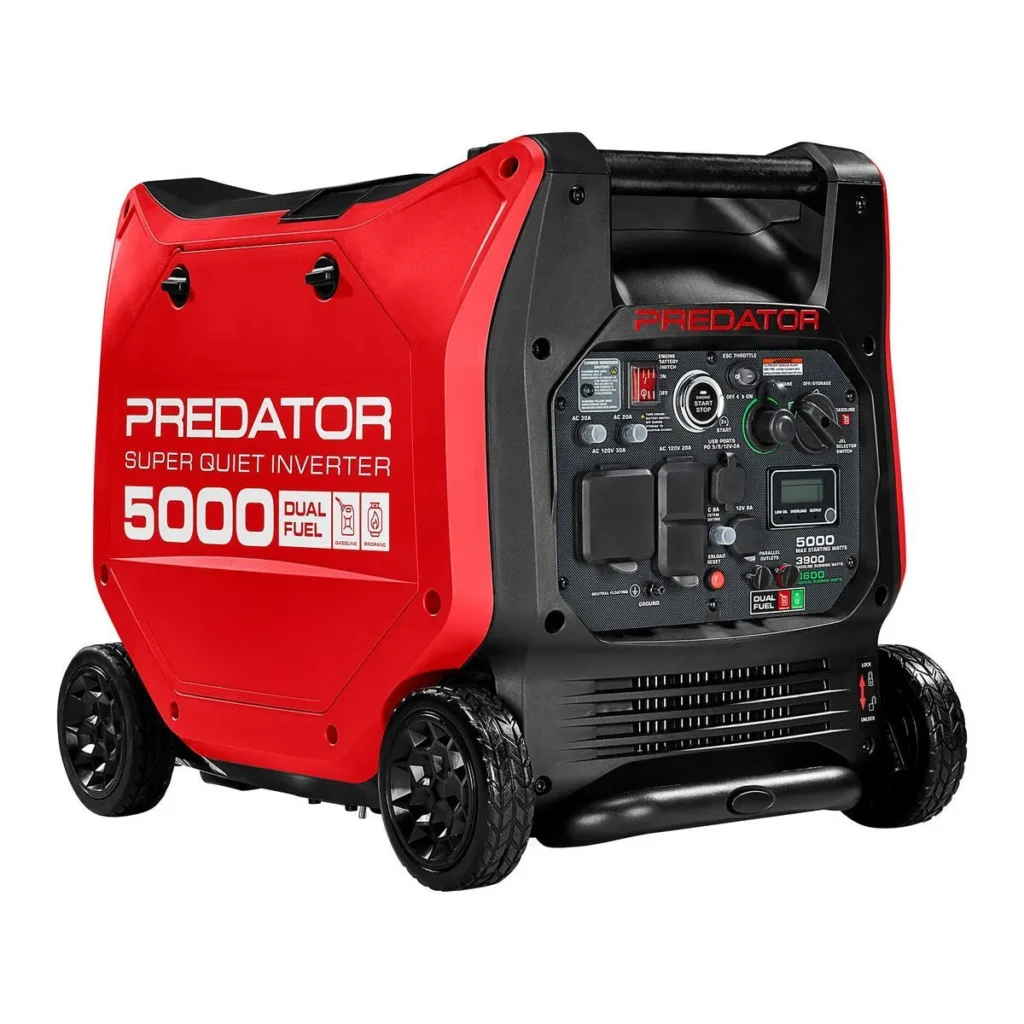
PREDATOR 5000 Watt Dual-Fuel
The PREDATOR® 5000 Max. Starting Watt Dual-Fuel SUPER QUIET™ Inverter Generator with CO SECURE® has dual-fuel capability to run on gasoline or propane. Powered by a reliable PREDATOR® 224cc gas engine, this generator has a TT-30 RV outlet and an extra-large fuel tank that delivers over 18 hours* of runtime, making it an unbeatable value. The push-button electric start powers the generator on and off with the press of a button, no manual choke required. A remote starting option lets you start up and shut down the generator from up to 100 ft. away. The 5000 starting watts and 3900 running watts make this an ideal RV generator with enough power to run most air conditioning units.
- SUPER QUIET™ enclosure significantly reduces generator noise levels, operating at only 61.7 dBA
- Pure sine wave inverter technology safely powers sensitive electronics such as smartphones, laptops, and TVs
- CO SECURE® technology automatically shuts down the generator for safety when harmful levels of carbon monoxide are detected
- Powerful PREDATOR® 224cc engine provides 40% more starting power** and reliable performance
- Telescoping handle and 5.5 in. flat-free wheels are over 50% larger** for increased mobility over rough terrain
- Integrated digital display makes it easy to monitor output power, volts, and running hours
- Fuel gauge to quickly check fuel levels
- Parallel ports make it easy to connect two 5000 watt generators for double the power
- Includes: (2) 120V 5-20R outlets, (1) 120V TT-30R RV outlet, (1) 12V DC outlet, (1) USB-C, (1) USB-A
- Complies with ANSI/PGMA G300 standard
Coming Up Next
Your equipment may be ready, your power may be reliable, and your trailer may be spotless—but if your workspace is disorganized, you’ll waste valuable time during every rush.
In the next chapter, we’ll cover the Trailer, Cart & Workspace Organization Checklist, showing you how professional vendors design efficient workstations, maximize storage, reduce unnecessary movement, and create a setup that allows them to serve more customers with less stress.
Chapter 9: Trailer, Cart & Workspace Organization — Designing a Setup That Works as Hard as You Do
There is a moment at every busy event when your trailer either becomes your greatest advantage or your biggest obstacle.
The lunch rush begins.
A family of six places an order.
A youth baseball team walks up behind them.
Someone wants extra syrup.
Another customer asks about sugar-free flavors.
The payment terminal is processing one order while another employee is filling cups.
Everything is happening at once.
This is when the design of your workspace truly matters.
If your trailer is organized, every movement feels natural.
Employees know exactly where to reach.
Supplies are easy to find.
Customers receive their orders quickly.
Stress stays low.
If your trailer is disorganized, however, every order takes longer than it should.
Employees bump into one another.
Someone searches for lids.
Another person can’t find the extra spoon straws.
The syrup bottles are across the trailer from the ice machine.
Every unnecessary step steals time.
Every wasted movement reduces efficiency.
The difference between a smooth operation and a frustrating one often has very little to do with how hard your team works.
It has everything to do with how intelligently your workspace is designed.
Professional vendors understand that a trailer should never force people to work harder.
It should help them work smarter.
Every Item Needs a Permanent Home
Walk into the trailer of an experienced vendor and ask where the napkins are.
They’ll point without looking.
Ask where the backup syrup pumps are stored.
Same answer.
Ask where the cleaning towels, spare gloves, extension cords, extra lids, or maintenance tools are located.
Again, they’ll know immediately.
That’s not because they have exceptional memories.
It’s because every item has a permanent home.
Consistency eliminates confusion.
When supplies always return to the same location after every event, everyone on the team develops muscle memory.
That means less searching, fewer interruptions, and faster service.
Organization isn’t about making your trailer look tidy.
It’s about making your business more efficient.
Design Around Your Workflow
Before installing shelves or storage bins, imagine preparing a customer order from start to finish.
Where does the cup come from?
Where is the ice?
Where are the syrups?
Where are the lids?
Where are the spoon straws?
Where is the napkin?
If employees must constantly walk back and forth across the trailer, your layout is working against you.
Instead, arrange your equipment in the same order the customer experience happens.
Cup.
Ice.
Syrup.
Toppings.
Lid.
Spoon straw.
Hand-off.
A logical workflow reduces movement, saves energy, and allows employees to develop a natural rhythm throughout the day.
The smoother the workflow, the faster your service becomes.
Store Frequently Used Items Within Arm’s Reach
Not every item deserves the same location.
The supplies you use hundreds of times each day should always be the easiest to reach.
Your most popular syrup flavors.
Medium-sized cups.
Spoon straws.
Napkins.
Gloves.
These should require little more than a simple reach.
Less frequently used supplies—such as seasonal decorations, specialty toppings, or backup inventory—can be stored farther away without affecting daily operations.
Think of your trailer as valuable real estate.
The closest storage locations belong to your most important supplies.
Vertical Storage Creates More Space
Many new vendors focus only on floor space.
Experienced operators look upward.
Shelving.
Wall-mounted organizers.
Hanging storage.
Magnetic tool holders.
Under-counter cabinets.
Every vertical surface represents an opportunity to create additional storage while keeping walkways clear.
A cleaner workspace is usually a safer workspace.
It also feels larger than it actually is.
Label Everything
Imagine hiring a new employee on Friday before a busy Saturday festival.
If every storage bin simply looks identical, they’ll spend the day asking questions.
Where are the lids?
Which bin holds gloves?
Where are the replacement syrup pumps?
Now imagine every container is clearly labeled.
Training becomes easier.
Restocking becomes faster.
Mistakes become less frequent.
Labels aren’t just for beginners.
They’re systems that continue saving time year after year.
Create Zones
One of the most effective ways to organize a trailer is by creating dedicated work zones.
Instead of viewing the trailer as one large workspace, divide it into smaller areas.
One area for ice preparation.
One for syrups.
One for toppings.
One for serving supplies.
One for cleaning equipment.
One for payment processing.
Each zone has a purpose.
Each purpose has its own equipment.
This simple approach reduces confusion and allows multiple employees to work efficiently without constantly crossing paths.
Plan for Restocking
Busy events don’t stop because you need more cups.
Professional vendors prepare for restocking before opening.
Keep backup inventory nearby but separate from the primary workstation.
When supplies begin running low, replacements can be added quickly without digging through storage containers or moving unrelated equipment.
Restocking should feel almost invisible to customers.
Secure Everything for Travel
Remember that your trailer spends part of its life moving down the road.
Anything that isn’t secured has the potential to shift, fall, or become damaged during transportation.
Shelves should have retaining lips where appropriate.
Storage bins should fit securely.
Heavy equipment should be properly fastened.
Small tools should be stored where they cannot roll around.
Arriving at an event with your trailer still perfectly organized saves valuable setup time.
Keep the Workspace Comfortable
Efficiency isn’t only about equipment.
It’s also about the people using it.
Good ventilation.
Adequate lighting.
Anti-fatigue floor mats.
Easy access to drinking water.
Small fans during hot weather.
These details reduce fatigue during long events and help employees maintain excellent customer service throughout the day.
Happy employees tend to provide better service.
Comfort is not a luxury.
It’s an investment in performance.
Review Your Layout After Every Event
One of the habits shared by outstanding vendors is constant improvement.
After each event, ask yourself simple questions.
What slowed us down?
What did we reach for most often?
What should be moved closer?
What wasn’t used at all?
Should anything be stored differently?
Your trailer should evolve alongside your business.
Small improvements made consistently over time create enormous gains in efficiency.
The perfect layout isn’t discovered.
It’s developed.
Organization Reduces Stress
Many people think organization is about appearance.
In reality, it’s about confidence.
When every tool has a place…
When every employee knows where supplies belong…
When every order follows the same workflow…
The entire business feels calmer.
Customers notice that calmness.
Employees appreciate it.
Owners sleep better because of it.
The goal isn’t perfection.
The goal is preparation.
Because when your busiest day of the season finally arrives, you’ll discover something remarkable.
A well-designed workspace doesn’t just help you serve more customers.
It helps you enjoy serving them.
And that’s one of the greatest competitive advantages any business can have.
Trailer & Workspace Organization Checklist ✓
Before every event, confirm you have:
☐ Clearly organized storage shelves
☐ Labeled storage bins
☐ Dedicated work zones
☐ Cup organizers
☐ Lid organizers
☐ Syrup bottle rack
☐ Under-counter storage
☐ Wall-mounted organizers
☐ Tool storage
☐ Cleaning supply cabinet
☐ Backup inventory storage
☐ Anti-fatigue floor mats
☐ Portable fan(s)
☐ LED workspace lighting
☐ Drinking water for staff
☐ Whiteboard or task list
☐ Daily opening checklist
☐ Daily closing checklist
☐ Secure straps for transport
☐ Non-slip shelf liners
☐ Extra storage containers
☐ Workspace reviewed before departure
Coming Up Next
Even the best-organized trailer can grind to a halt if one small part breaks.
The vendors who stay open during busy weekends aren’t always the ones with the newest equipment—they’re the ones who come prepared.
In the next chapter, we’ll build the Maintenance, Spare Parts & Emergency Repair Kit Checklist, covering replacement blades, belts, tools, spare hardware, lubricants, first-response repairs, and the emergency supplies that can save an entire day’s revenue when something unexpected happens.
Chapter 10: Maintenance, Spare Parts & Emergency Repair Kit — Prepare for the Problem Before It Happens
Every successful shaved ice vendor eventually learns the same lesson.
It’s not a matter of if something will break.
It’s when.
A shaving blade will become dull.
A fuse will blow.
A bolt will loosen from vibration after miles of towing.
A syrup pump will clog.
A power cord will stop working.
A tire may lose air on the way to an event.
None of these situations are unusual.
In fact, they’re part of running any mobile business.
What separates experienced vendors from beginners isn’t that they avoid problems altogether.
It’s that they prepare for them long before they happen.
There’s an old saying in business:
“Hope is not a strategy.”
Professional vendors don’t hope everything goes perfectly.
They carry the tools, spare parts, and knowledge needed to keep serving customers when unexpected challenges appear.
That’s one of the biggest differences between a hobby and a business.
Businesses prepare.
Your Business Doesn’t Stop When Something Breaks
Imagine you’ve been invited to the largest festival of your season.
Hundreds of people are walking toward your trailer.
The line is growing longer by the minute.
Then suddenly…
Your shaved ice machine begins making an unusual sound.
Maybe it’s a loose bolt.
Maybe the shaving blade has shifted.
Maybe something small worked itself loose during transportation.
If you have the proper tools, the interruption may last five minutes.
If you don’t…
Your busiest day of the year could be over before it truly begins.
Preparation isn’t about expecting disaster.
It’s about reducing downtime.
Every minute your trailer isn’t serving customers is a minute you’re losing revenue.
Build a Dedicated Repair Kit
One mistake many new vendors make is assuming the toolbox in their garage will be enough.
Eventually, tools disappear.
Someone borrows a screwdriver.
A wrench ends up in another vehicle.
A socket goes missing.
Professional vendors keep a repair kit that belongs exclusively to the business.
It travels with the trailer.
It stays organized.
It gets inspected before every season.
That way, there’s never any uncertainty about whether the tools you need are actually available.
The Importance of Spare Shaving Blades
Your shaving blade is one of the hardest-working parts of your entire operation.
Every cup of shaved ice depends on it.
Over time, even the highest-quality blades become dull.
A dull blade doesn’t simply reduce ice quality.
It can slow production, strain the motor, increase wear on your machine, and produce inconsistent ice texture.
Replacing a blade before it becomes a problem is one of the simplest ways to protect both your equipment and your customer experience.
Never begin a busy weekend without at least one spare blade.
Experienced vendors often carry more than one.
Keep Spare Hardware
Small parts have a way of disappearing at the worst possible moments.
Washers.
Nuts.
Bolts.
Screws.
Pins.
Retaining clips.
Individually, they cost very little.
Without them, however, an important repair may become impossible.
Organize spare hardware in labeled containers so the correct part can be found quickly.
A few dollars spent today may save hundreds of dollars in lost sales tomorrow.
Lubrication Is Preventive Maintenance
Many moving parts perform best when maintained according to the manufacturer’s recommendations.
If your equipment requires food-safe lubricant, keep it readily available.
Lubrication reduces friction.
Friction creates wear.
Less wear means longer equipment life.
Always follow the manufacturer’s maintenance guidelines, and never use products that aren’t approved for food equipment.
Proper maintenance protects both performance and safety.
Carry Basic Hand Tools
Every repair kit should include the essentials.
Screwdrivers.
Adjustable wrenches.
Socket sets.
Allen keys.
Pliers.
Wire cutters.
Utility knife.
Tape measure.
Flashlight.
These aren’t glamorous purchases.
They’re practical ones.
When something unexpected happens, having the right tool often makes the difference between a quick repair and a canceled event.
Don’t Overlook Electrical Repairs
Electrical issues are among the most common problems mobile vendors encounter.
Loose plugs.
Blown fuses.
Damaged extension cords.
Worn connectors.
Carry replacement fuses that match your equipment specifications.
Inspect cords regularly.
Replace damaged electrical components immediately.
Never attempt unsafe temporary repairs simply to finish an event.
Protecting people always comes before protecting profits.
Stock Extra Consumables
Some supplies wear out simply through regular use.
Cleaning towels.
Disposable gloves.
Zip ties.
Electrical tape.
Batteries.
Marker pens.
Labels.
These items seem insignificant until they’re suddenly unavailable.
Experienced vendors keep extras because they know busy weekends rarely unfold exactly as planned.
Running out of a five-dollar supply item should never interrupt a five-thousand-dollar weekend.
Learn Your Equipment Before You Need To Repair It
One of the best investments you can make isn’t buying another tool.
It’s learning how your equipment works.
Read the owner’s manual.
Understand routine maintenance procedures.
Know where important components are located.
Practice replacing wear parts before you’re standing in the middle of a crowded festival.
Confidence comes from familiarity.
The more you understand your equipment, the calmer you’ll remain when something unexpected happens.
Create a Maintenance Schedule
Maintenance should never depend on memory.
Develop a routine.
Daily inspections.
Weekly cleaning.
Monthly hardware checks.
Seasonal servicing.
Blade inspections.
Generator maintenance.
Trailer inspections.
Write everything down.
A simple maintenance log helps ensure important tasks aren’t forgotten and creates valuable records if problems develop later.
Successful businesses don’t leave important work to chance.
They rely on systems.
Inspect Before Every Event
Many repairs can be prevented with a five-minute inspection.
Walk around your trailer.
Check your tires.
Inspect extension cords.
Test lights.
Confirm equipment starts properly.
Verify syrup pumps operate smoothly.
Check that tools are present.
Look for loose hardware.
Listen for unusual sounds.
Small observations often prevent major problems.
Think of these inspections as inexpensive insurance.
Know When to Call a Professional
Being prepared doesn’t mean attempting repairs beyond your experience.
Some problems require qualified technicians.
Electrical failures.
Major engine repairs.
Structural trailer issues.
Complex mechanical failures.
Knowing your limits is part of being a professional business owner.
Attempting unsafe repairs may create larger problems than the original issue.
Sometimes the smartest decision is asking for expert help.
Problems Don’t Build Great Businesses—Responses Do
Every successful business encounters challenges.
Customers rarely judge you because something unexpected happened.
They judge you by how you responded.
Did you stay calm?
Did you communicate honestly?
Did you solve the problem professionally?
Did you continue serving customers safely?
Preparation creates confidence.
Confidence creates professionalism.
Professionalism builds trust.
And trust is one of the strongest competitive advantages any shaved ice business can earn.
The goal isn’t to eliminate every problem.
The goal is to become the kind of business that’s ready for them.
Because when challenges arrive—and eventually they will—you won’t panic.
You’ll open your repair kit, solve the issue, and get back to doing what you came to do:
Creating smiles, serving customers, and building a business that’s prepared for whatever tomorrow brings.
Maintenance & Emergency Repair Kit Checklist ✓
Before every event, confirm you have:
☐ Spare shaving blades
☐ Blade adjustment tools
☐ Manufacturer-approved food-safe lubricant
☐ Complete screwdriver set
☐ Adjustable wrench
☐ Socket set
☐ Allen key set
☐ Needle-nose pliers
☐ Utility knife
☐ Flashlight with extra batteries
☐ Electrical tape
☐ Zip ties
☐ Spare nuts, bolts, screws, washers, and retaining clips
☐ Replacement fuses
☐ Spare extension cord
☐ Tire pressure gauge
☐ Air compressor or portable tire inflator
☐ Duct tape (for non-food-contact emergency fixes)
☐ Multi-tool
☐ Maintenance logbook
☐ Equipment owner’s manuals
☐ Emergency contact list for equipment service providers
Coming Up Next
Now that your business is fully equipped and prepared for unexpected challenges, it’s time to focus on the people who make everything possible.
In the next chapter, we’ll cover the Staff, Customer Service & Team Essentials Checklist—how to hire, train, organize, and inspire a team that delivers fast service, memorable customer experiences, and the kind of hospitality that turns first-time visitors into loyal fans of your shaved ice business.
